

In a landmark case against social media companies Meta and Google, a Los Angeles jury granted a woman $6 million in a verdict announced Wednesday. The plaintiff claimed that platform design features such as infinite scroll and autoplay caused a childhood addiction that resulted in anxiety, body dysmorphia, and suicidal thoughts.
Rolling Stone spoke with one of the plaintiff’s trial attorneys, Emily Jeffcot from Morgan & Morgan law firm, about the huge win. It’s the first such personal injury case to reach trial, amid thousands of cases that have been consolidated in California. The 20-year-old plaintiff, identified in court documents as K.G.M, alleged that excessive use of Instagram and YouTube as a child intensified her mental health issues. The jury deliberated for nine days before reaching their decision, awarding KGM $3 million in compensatory damages and an additional $3 million in punitive damages to the plaintiff. (Meta and Google have said they will appeal.)
Jeffcot is one of the lead lawyers on an upcoming lawsuit against social media companies, and she reveals the next case will focus on addiction as well, and the potential harm caused by lack of sleep for minors who use their phones all hours of the night. She also talks about how this bellwether trial finding fault with social media companies could impact legislation, and change the way kids use these platforms in the future.
This was a very long deliberation, can you share any insight on what the conversation was like between jurors?
Some of the jurors have made statements to the press, and we were able to speak with a few of them. There was a lot of discussion about what were the appropriate damages in this case, how to adequately compensate [K.G.M], and how to do so in a way that punishes the defendant. Ultimately, they negotiated and found a way to come to the number that they chose in this case.
It’s such a landmark case, what would you say set this one apart?
We presented a pretty novel theory. We made it clear that it’s not about what kids are looking at — that’s not why they keep coming back to these platforms. They keep coming back because they were designed to be addictive.
Controls that we have said would be helpful would be not having infinite scroll, having other controls that call for taking a break or not using it at night. Things like that can become actionable because they don’t touch on content. The reason that content is such a big issue is because there’s section 230 of the Communications Decency Act, which immunizes companies like Meta, Google, and YouTube from anything related to content. There are a lot of protections around content, and so we can’t sue them for the content that is viewed by a minor, but what we can do is go after how they [design features] like infinite scroll to keep minors — kids and even young adults — glued to their phones.
So future lawsuits can focus on the harm in making them addictive?
A lot of the prior cases that tried to take on these companies, really made it about the content: “My kid saw something that was disturbing and harmful and it made them do something to themselves or hurt somebody else.” That’s what you saw a decade ago, when you first started seeing cases. It didn’t get to the heart of the matter, which is, why are these kids staying on social media for so long? It’s not because parents are just letting them do it. It’s because they are literally addicted, and the addiction is a real thing, and prevents a young user from being able to act reasonably and rationally when it comes to [thinking] ‘Hey, I should put this phone down, or I should go do something else.’ They can’t do it. Through a lawsuit like this — and continuing litigation, there are thousands of these cases — that’s going to effectuate change by forcing these companies to deal with the fact that the way that they have designed it, the bones of social media, is inherently unhealthy to kids.
What happens next for people with personal injury cases like these?
There’s another trial being scheduled, we’ll know the exact date next week. We’ve already worked up six cases before our judge, Carolyn Kuhl. She’s going to just keep trying case after case until some sort of global resolution is reached. Or if that doesn’t happen, what you’ll see is that these cases start getting distributed out to other judges to handle, and you’ll start seeing simultaneous trials, and it goes on until something major happens.
In addition to personal injury, there are also school districts that are alleging they were harmed, because essentially, these kids are all glued to their phones during class, and they’ve had to bring in additional services to try to deal with the addiction in school. That’s a separate type of case, but also ongoing.
You are one of the four co-leads on the next trial you have coming up. Can you tell me a little about that one?
It’s on behalf of a young boy who started using [social media] when he was under age 10. His usage became so severe and dramatic that having moments away from his phone resulted in severe anxiety, depression, and suicidal ideation. One thing that we didn’t really discuss as much in this first trial that will certainly be a part of the second trial is that kids start using the phone at night. They don’t go to sleep, they’ll scroll and scroll until the wee hours of the morning. Developing brains need a lot of sleep, and so if a kid’s only getting three or four hours of sleep a night, it has ramifications that are completely debilitating. That’s going to be a major issue in this next trial.
When you talk about resolution, about affecting change, what does that look like for you?
It’s like seat belts in cars. They weren’t required 50 years ago, and it wasn’t until a series of product liability cases showed the safety of seat belts. They showed that the defendants in those cases knew that seat belts could be so helpful in decreasing the risk of injury in vehicular accidents.
There was a series of litigation that resulted in seat belts being installed in all vehicles. Congress took up the issue, and now seat belts in cars are required. My personal belief is that the same kind of thing is going to happen here. As lawyers we [can show] that what these companies are doing right now is not enough to keep these minors safe, so that these companies can start acting and conforming with a way that we do believe is safe. So the limits [on social media] that I talked about before will hopefully become the norm. And then maybe you will have congressional action that forces and makes it law that those restrictions or those parental controls need to be in place. It’s a multi-step process that takes time, but without verdicts like the one we got yesterday, and the litigation continuing forward, you may not see that change.
In essence, a way of pressuring the companies to act.
Exactly. The public reaction to, not even just the verdict yesterday but to the trial itself, has been so positive because the outcome is monumental. These changes need to take effect.
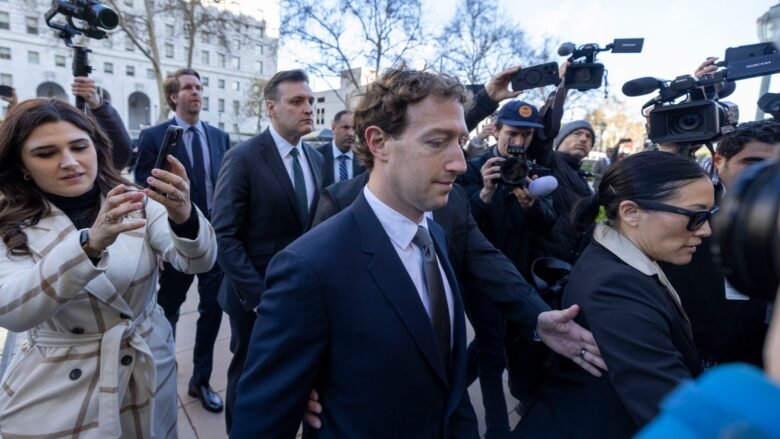
One of the focal points of the trial was when Zuckerberg went to testify before Congress and said, for example, Instagram doesn’t allow users under 13 on their platform and once they find them, they kick them off. But juxtapose that next to [internal Meta] documents saying that tweens are the future, I’m paraphrasing.
He made those statements to Congress because Congress is on alert that there is an issue here that needs to be addressed. You see the beginnings of that happening right now, and through the work of this litigation and ongoing efforts in Congress, I’m hopeful that we will see the change that we want to make these platforms safer.
What’s a moment that has stuck with you from the trial?
When the verdict came down yesterday, the jury answered yes to every question. And that almost made me start crying, because we have fought so hard and so long to bring these companies to justice, and they have fought us every step of the way, denying that their platforms do any harm to children.
This was like an unequivocal statement that yes, they do, and they can’t hide anymore.
This interview has been edited for length and clarity.