
Space data companies have argued for years that the private sector needs their products, but the real uptake has been from government buyers. Now, with artificial intelligence top of mind for business, one Spanish startup is trying to become the go-to source of ground truth for enterprise.
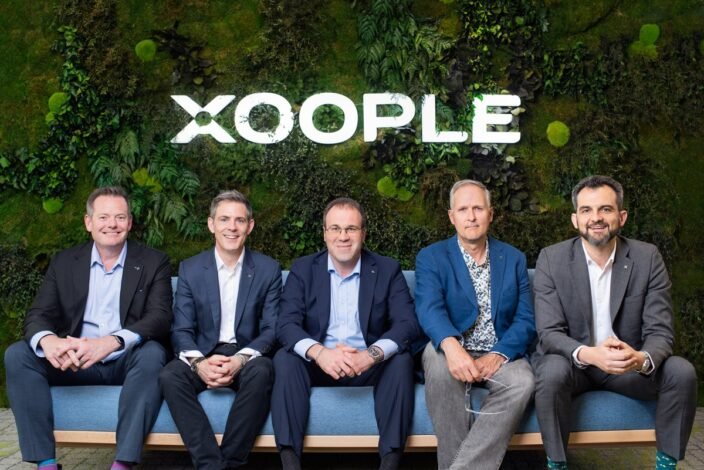
Xoople (said like “zoople’) is developing a satellite constellation to collect precise data aimed at deep learning models. The startup was founded in 2019 and has spent the last seven years developing its tech stack around data collected by government spacecraft, and integrating with cloud providers.
CEO and cofounder Fabrizio Pirondini told TechCrunch that the company has closed a $130 million Series B led by Nazca Capital. Other investors include MCH Private Equity, CDTI, a tech development fund backed by the Spanish government, Buenavista Equity Partners, and Endeavor Catalyst.
The startup also announced Monday a deal with U.S. space and defense contractor L3Harris Technologies to begin building sensors for Xoople’s spacecraft, which are designed to collect “a stream of data that is going to be two orders of magnitude better than existing monitoring systems,” Pirondini told TechCrunch.
L3Harris has built some of the most advanced commercial imaging systems on orbit. However, Pirondini wouldn’t share any details about the satellites, not even how many the company wants to build, except that the sensors will collect optical data. Those systems aren’t cheap, and the company continues to raise capital to fund its full development.
Pirondi declined to share his firm’s valuation after the current fundraising round, except to note that “we are in unicorn territory.” The company has raised $225 million in total.
The company’s focus on data quality is a key differentiator. Still, Xoople is entering a crowded space with several mature competitors, including Vantor, Planet, BlackSky, and Airbus in Europe, that are already operating satellites on orbit and developing AI-focused datasets.
Techcrunch event
San Francisco, CA
|
October 13-15, 2026
The twist for Xoople is its focus on enterprise platforms.
“Our business model is all about embedding our data and our solutions directly to the ecosystem of those so that they can provide those services directly to their customers,” Pirondelli said.
Pirondelli described use cases, including government agencies tracking transportation networks and damage from natural disasters, agribusiness monitoring crop health, or large firms keeping an eye on infrastructure projects or supply chains.
Aravind Ravichandran, the CEO of Earth observation sector consultancy TerraWatch Space, told TechCrunch that Xoople’s decision to prepare its distribution strategy before it has its own data is intriguing. For now, it relies on publicly available data, like that collected by the European Space Agency’s Sentinel-2 spacecraft.
“They laid the distribution pipes before having their own data supply — embedding into Microsoft and Esri, the two platforms where enterprise, government and most GIS buyers already live, but neither has proprietary EO data,” Ravichandran said. “Google’s head start on geospatial AI models is the benchmark they’ll be measured against.”
It’s not clear what balance Xoople will strike between providing raw data and developing its own analysis tools, but Pirondi hopes to build “Earth’s System of Record,” a project he expects will ultimately include the development of a true AI world model alongside partners.