

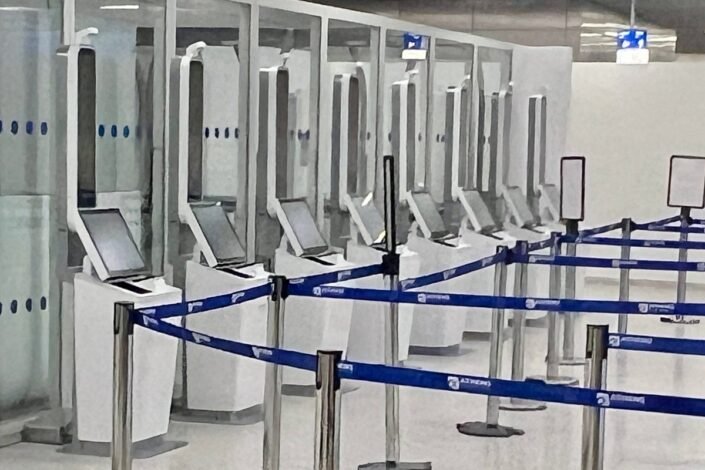
For a decade, the European Union has been working towards 100 per cent “digital borders”. The deadline for all Schengen area frontiers to collect biometrics from every third-country national under the EU entry-exit system was 10 April.
While some countries are fully compliant with the EES, Greece stunned the travel industry by announcing that British visitors will be exempt from providing fingerprints and facial biometrics this summer.
The Greek Embassy in London announced on social media: “British passport holders are excluded from biometric registration at Greek border crossing points.”
Long queues for passport control in Italy, Spain and elsewhere have led to some travellers missing homebound flights.
Eleni Skarveli, director of the Greek National Tourism Organisation in the UK, said the move is aimed at “ensuring a smoother and more efficient arrival experience in Greece”. She told The Independent: “Practically, this means that the entry process in place before the implementation of the EES will remain unchanged.”
In other words, British visitors will have their passports manually examined and stamped. Their personal data will be “skimmed” and recorded.
EU entry-exit system kiosks installed at Athens airport may be used by other third-country nationals, such as Americans and Australians, but will not be open to British travellers.
The weekend revelation has been met with some dismay in Brussels, which is seeking to hold the line and promote a system that it says “is working very well in the overwhelming majority of member states”.
A spokesperson for the European Commission said: “We are in contact with the Greek authorities to receive clarifications on this.
“As a general rule, the EES foresees flexibilities when it comes to the registration of biometrics. The suspension of the collection of biometric data is possible at specific border crossing points and for a limited amount of time in cases of exceptional circumstances that lead to excessive waiting times.”
The key phrase is this: “The legal framework does not foresee blanket exemption for national of specific third countries and for an extended period of time.”
In other words, calling off the biometric checks at a small Greek island airport for a few hours when queues build up is acceptable; scrapping the measures all summer long is not.
The Commission says that all 29 Schengen area member states signed off on the schedule, confirming they would be ready and compliant.
As the build-up to summer continues, special lanes are expected to be introduced at busy Greek airports to segregate British arrivals.
The Independent understands other third-country nationals will be processed in accordance with the official policy. Far more British travellers go to Greece than all other non-Europeans combined.
Read more: What does the EU’s new entry-exit system mean for British travellers?