

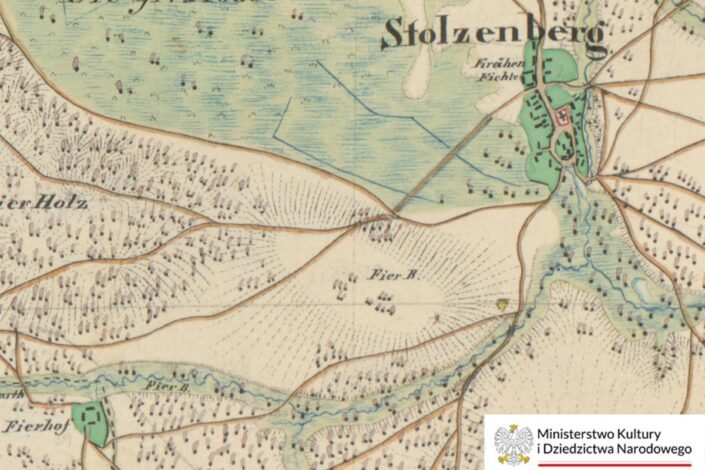
Archaeologists have uncovered traces of a deserted medieval city in a remote forest in Poland.
Stolzenberg, a city estimated to have been founded in the late 13th or early 14th century, was abandoned under unknown circumstances near the modern northwestern settlement of Sławoborze.
In 2020, preliminary metal detector research found over 400 metal artefacts, including belt fittings, coat clasps and medieval metal coins at the site.
Now, drilling has revealed layers more than two metres deep with a visible central market and street leading to the city gate.
Piotr Wroniecki, an archaeologist from the Relicta Foundation, told the Polish Press Agency (PAP): “In an area of approximately six hectares, surrounded by a rampart and moat, we recorded over 1,500 anomalies, or unusual terrain features, suggesting the presence of structures hidden underground, such as ancient buildings.”
According to archaeologists, the Margraves of Brandenburg (Neumark), a major principality of the Holy Roman Empire, are Stolzenberg’s most likely founders.
The foundation aims to clarify when the town was founded and under what circumstances it became unpopulated.
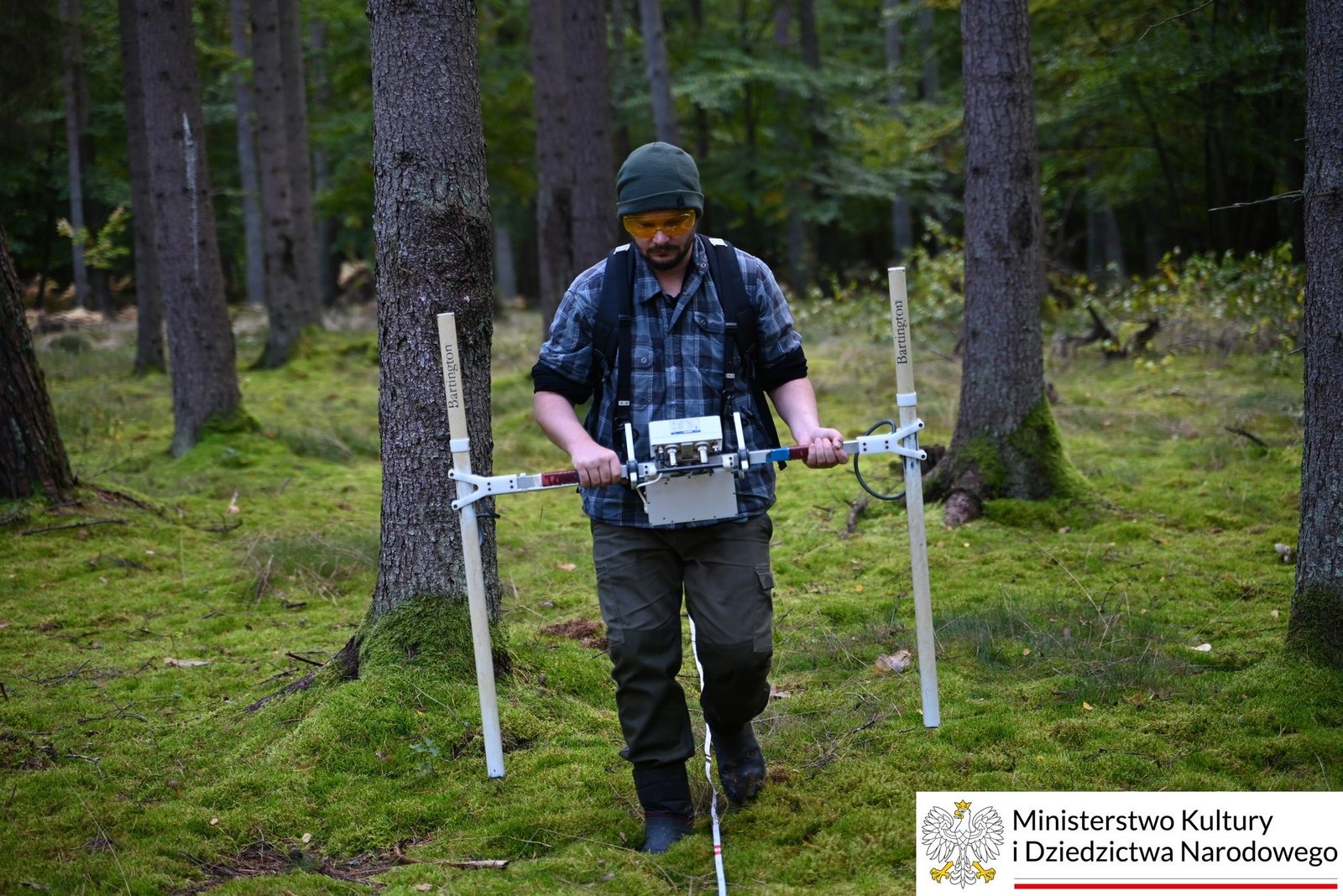
Marcin Krzepkowski from the Relicta Foundation collected data across 25 hectares while researching the vanished city of Stolzenberg.
Krzepkowski told PAP: “We cannot say what its population was or why the town was abandoned. Usually, more than one factor determines the decline of a town.”
He added that natural causes, such as floods, the decline of trade and wars, could be behind the desertion of the area.
According to the Relicta Foundation, geophysical research, geomorphological drilling and aerial terrain scanning were used to uncover the “lost city”.
Relicta said in a post on Facebook in December: “In October and November, we conducted non-invasive studies on the territory of the vanished medieval city of Stolzenberg / Sławoborze, discovered in 2019 in the forests of Nadleśnictwo Świdwin, Lasy Państwowe.”
The research project was funded by the Minister of Culture and National Heritage funds from the Culture Promotion Fund.
Read more: How digging up the past on an archaeology holiday unearthed real calm and connection