

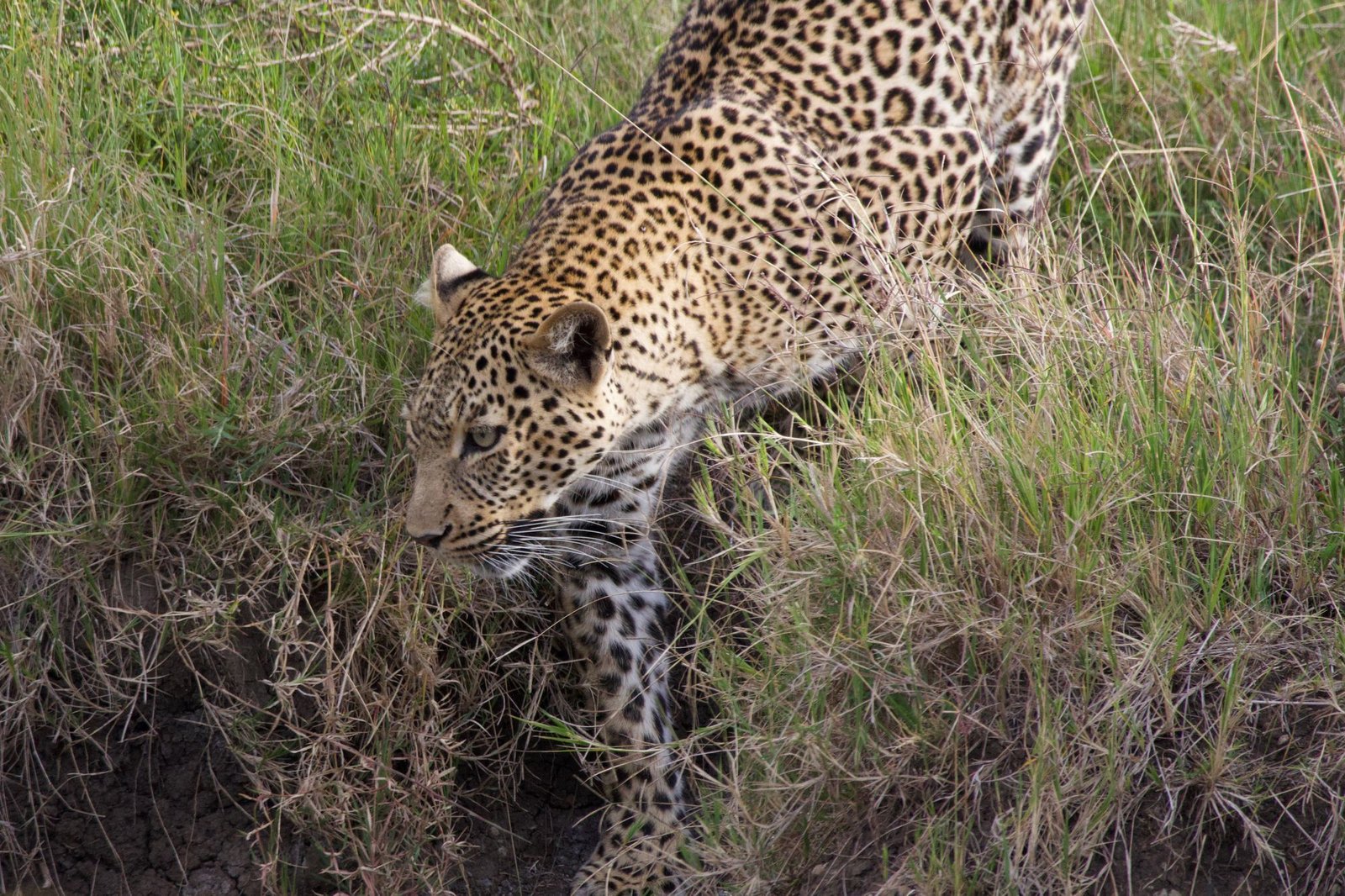
In the Maasai Mara National Reserve, a female leopard is on route to the river, trailed by her playful four-month-old cub, intent on perfecting his crouch and pounce technique on everything from butterflies to his mother. Behind them, the remains of an impala swings from an acacia tree. “She’s had a good night of hunting and feasting but now they need to drink,” Francis Siamon, my Great Plains Conservation guide, explains. This is an extraordinary wildlife encounter, not only because it’s rare to see a leopard with cub so active by day, but also as there is only one other vehicle close by. We stay for an hour, enthralled by the rare company of these normally elusive cats, plus other interlopers: a mob of banded mongoose that stand on hind legs with noses aquiver, and a warthog in a hurry, a trail of young replicas hot on her heels.
Later, it’s a different story when, from a distance, we count eighteen safari vehicles in pursuit of an animal, which Francis says is most likely to be a cheetah. It’s small irony that this is a hunter being hunted, not with guns but zoom lenses. There’s no pleasure to the scene, only discomfort in the realisation that the traffic is impeding the cat’s success in scoring a meal. However, it’s during the annual migration, from July to August, when up to 200 safari vehicles crowd the river crossings, that the cheetah, a hunter by day, suffers the most.
I first visited the Maasai Mara National Reserve 30 years ago, when there were just a handful of tented camps, and wildlife thrived in abundance. This year, during the annual migration, footage of river crossings being blocked by unethical tourists and guides, went viral. The disruption of the wildebeest’s migratory patterns was the tip of what was being described, by conservationists, as an unacceptable breakdown of management, in what has long been hailed as the world’s premier wildlife location.
There are now over 150 accommodation options within The National Reserve, including the controversial Ritz Carlton that is widely believed to block a migration corridor, and the bordering fifteen conservancies (land leased from Maasai landowners for tourism purposes), ranging from low-key tented camps to larger lodges. Choosing where you stay has never felt more important.
Read more: What I learned about fear and feminism from a bush guide in Botswana
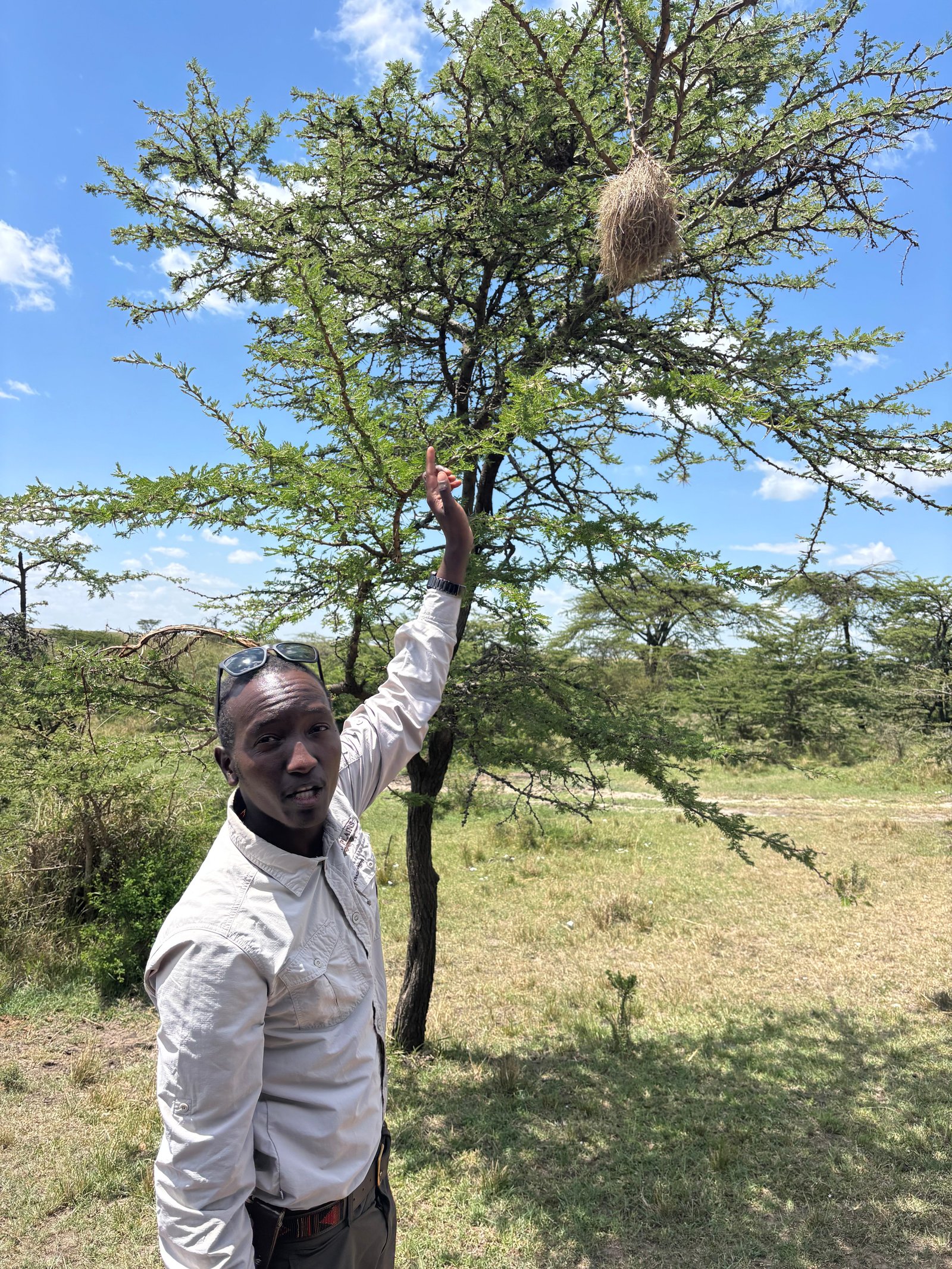
“Leaders in conservation tourism within the region are Great Plains Conservation, Kicheche Camps, and Saruni Basecamp, all of which place conversation and community at the heart of their operations,” says Justin Francis OBE, executive chair and co-founder of the Responsible Travel company, established in 2000. “Although the reserve does face difficulties, I’m feeling positive for the future of the Maasai Mara because of the conservancies, which are a huge conservation success story. What many tourists don’t realise is that lease fees provide a sustainable income for the Maasai people, as well as conserving vital migration corridors. Although the migration is a magnificent spectacle, we do urge clients not to obsess about it, because there’s so much more to experience.”
Kenya Wildlife Service rangers work with the National Reserve, and the rangers, who are privately employed by the conservancies, act as frontline conservationists in encouraging guides and drivers to put the welfare of wildlife first. “We understand the tourist’s desire to see the Big Five (lion, leopard, rhinoceros, elephant and Cape buffalo), but the pressure in delivering this can lead to bad behaviour,” one tells me. “Responsible tourists should refuse to engage in activities that are clearly harmful. Ask your driver to move on when there are too many vehicles and be vocal if you aren’t happy about a guide or driver’s behaviour.”
Great Plains Conservation Camps are owned by two National Geographic filmmakers and photographers at large, Dereck and Beverly Joubert, both recipients of the World Ecology Award, alongside Jane Goodall, King Charles and Richard Leakey, for contributions to conservation. They pump all money generated by tourism back to wildlife and community projects (including 1.1 million acres protected, 60,000 indigenous trees planted, mobile clinics funded to reach 2,500 school-age children, 101 elephants reintroduced, 29 female rangers trained and 45 teachers sponsored). “When tourism is done well, it greatly benefits the local communities in terms of education, health care, wealth and well-being. But we are seeing the emergence of mass tourism with lower revenues and that doesn’t trickle down to communities,” says Dereck Joubert. “It spawns overcrowding, not quality wildlife viewing opportunities, and encourages bad behaviour, such as disruption of the migration.”
Read more: The most thrilling way to do a safari is by running a marathon
The newest of Great Plains’ four camps is Mara Toto Tree Camp, which opened in summer 2024. Uniquely built on a platform in the trees, above a river filled with hippos, there are four vast tented suites within this luxurious explorer’s camp, made of wood and canvas, complete with writing desks, roll-top baths and mosquito-draped four-poster beds. It was built with minimal disturbance to the environment and runs on solar power. My lullaby to sleep is a chorus of soft hippo grunts and, when I stir during the night, I find the sound of the hippos splashing strangely comforting.
Although the reserve does face difficulties, I’m feeling positive for the future of the Maasai Mara because of the conservancies, which are a huge conservation success story
Justin Francis, executive chair and co-founder of the Responsible Travel
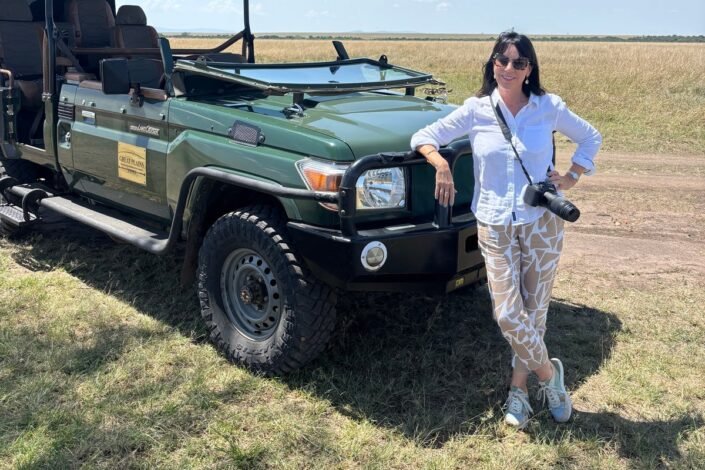
It’s a 5.30am start each day. While it’s always wonderful to see the so-called Big Five, I’m as happy with the sight of a Pied Kingfisher, or a bachelor herd of Thompson gazelle, jumping with joy at surviving the night. “The pressure guides feel is real,” Francis tells me. “Top of most lists is to see a big cat hunting, or at least with fresh kill.” He points to where a line of around 20 jeeps jostle for space on a narrow ridge. We turn in the other direction. Our prize is a blissfully serene river vista, where five elephant and Yellow-billed Stork wade together, next to a three-metre-long sleeping crocodile.
After two days, I move on to another of Great Plains’ small luxury camps, Mara Nyika, which sits within the 53,000-acre private Naboisho Conservancy, home to the largest pride of lions in the entire Maasai Mara region. Established in 2010, Naboisho (which means coming together in Swahili) supports around 500 Maasai landowners through leasing of their land. Although the Maasai people retain their grazing rights here, the land is being given a chance to recover after years of being farmed. It also acts as an unhindered migration corridor, connecting the Masai Mara National Park and the Loita Plains used by several hundred thousand animals.
Read more: Why remote South Georgia is the greatest island on Earth
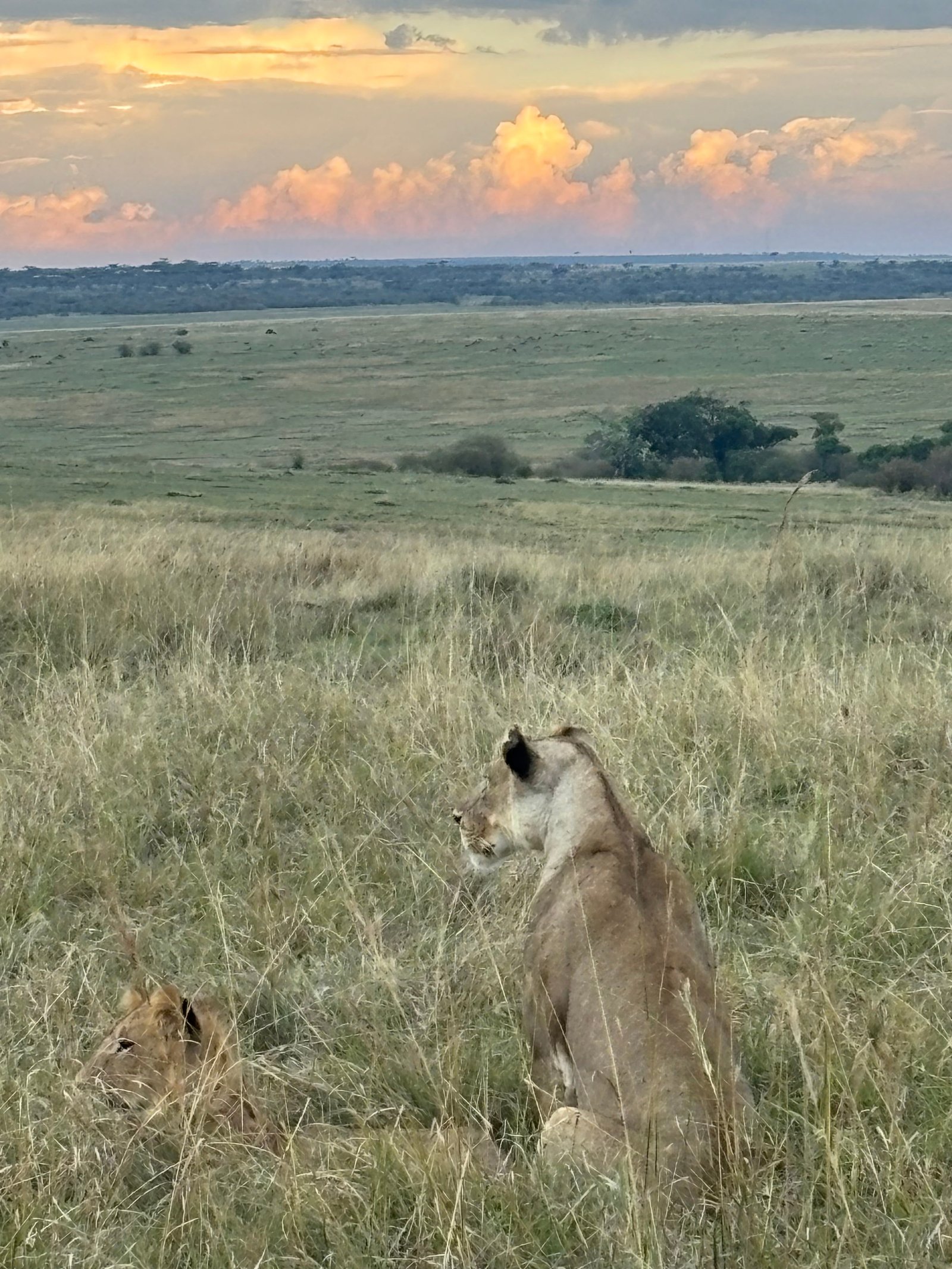
To explore you must be staying in one of the seven camps located within its 200sq km so there’s no danger of safari vehicle scrums. A maximum of five vehicles are allowed at any one location and rangers are vigilant in moving on any vehicle that is getting too close to the animals or staying too long. We wait for our turn to get up close to five lionesses and six cubs with a kill. It’s a wildebeest that has provided breakfast; half of its ribs gnawed bare, one leg being fought over by the cubs in a gruesome tug of war. Loitering close by are spotted hyena, ready to swoop in to grind all that remains, including bones and hooves.
There’s no doubt that the Maasai Mara National Park faces challenges regarding overtourism, but there is much to feel positive about, largely thanks to the work of the conservancies. The advice from all is not to fixate on seeing the migration and choose the shoulder period, from mid-October to March, to visit instead. Crucially, make your arrangements with a responsible safari company that combines exploring the National Reserve with a stay in a conservancy. “Don’t be afraid to ask questions,” says Francis. “When it comes to policies about responsible tourism, ask to see them. If the camp you’re planning to stay in is not happy to share, think again.”
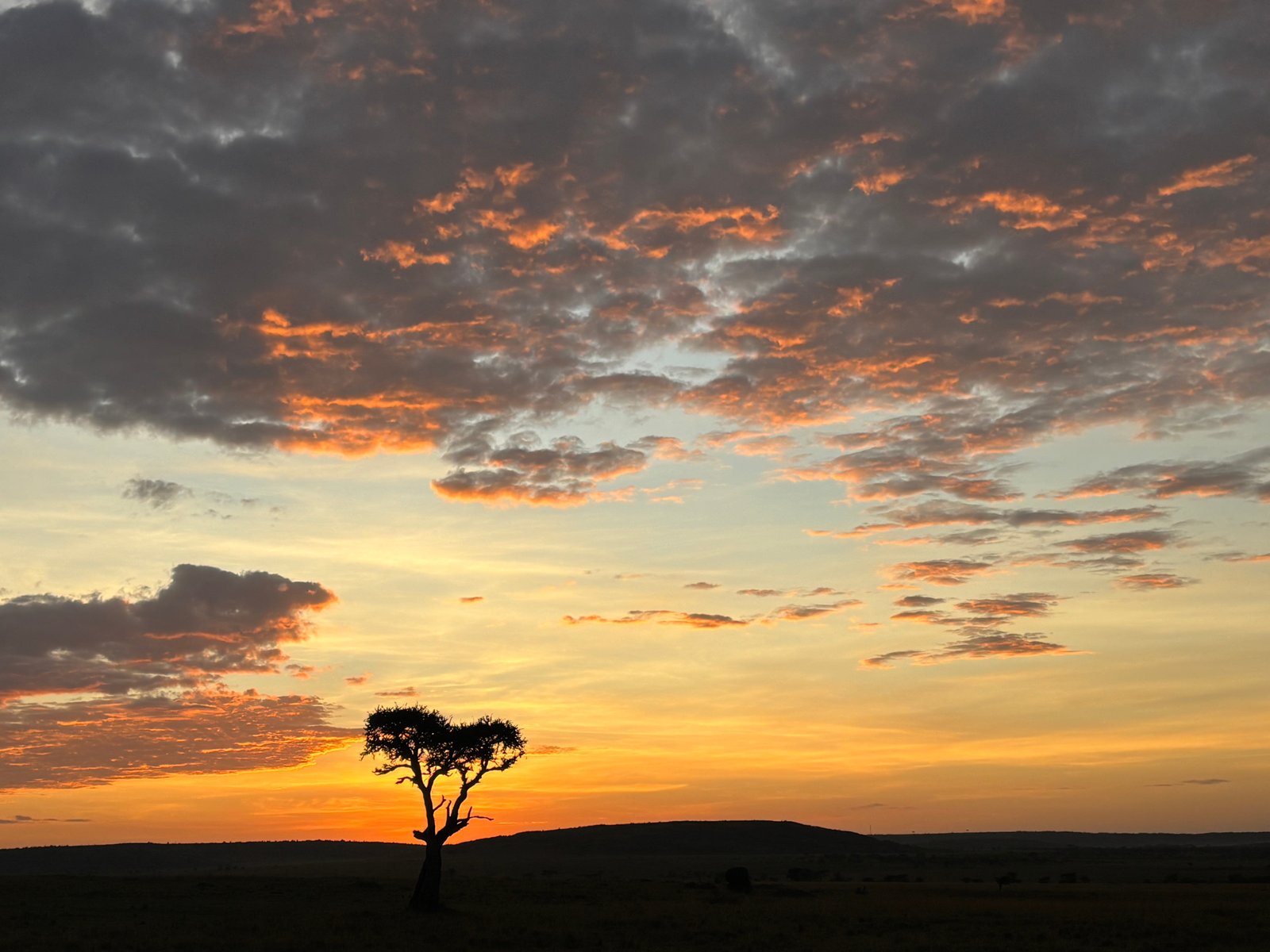
That evening, I sit close to the fire while listening to the roar of a distant lion. Above me, vervet monkeys peer from the trees. “Be careful with your snack as they are the epitome of cheeky monkeys,” my waiter says, covering up the bowl of nuts he’s served with a dawa (Swahili for medicine) – a blend of vodka, lime, honey and brown sugar. He asks me what the highlight of my day has been, and my overriding memory isn’t of lion chewing on wildebeest, but of seeing beefy baboon grazing on delicate white Rain lilies (often referred to as tissue flowers) that sprout after sudden downfalls. The Maasai Mara’s crown may have wobbled, but it’s certainly not fallen.
Kate travelled as a guest of Great Plains small luxury camps.