


The Lick
On an otherwise unremarkable day, a young woman in a gray Chevy Impala pulled up to the front of a sprawling modern home in a sleepy Florida town. Killing the ignition, she stepped out of the car and did a quick survey of the manicured lawn. She wore hospital scrubs and a pleasant, unreadable expression. Her long, dark hair was pulled back tightly from her heart-shaped face. She had dark eyes, long lashes, the kind of beauty that calms more than it excites, that broadcasts that all is as it should be.
The woman rang the front doorbell. When no one answered, she walked to the back of the house. Finding the yard deserted, she located a low window and pulled a glass cutter out of a brown satchel. She cut a hole in the glass just large enough to slip her body through it.
Inside, the house was hushed and still. The light on an alarm panel flashed green: motion sensor disarmed. The lines of the rooms were stark and sleek — moneyed, but without, it seemed, a feminine touch. This was a disappointment to the woman, who moved among the polished wood surfaces quietly, systematically. Electronics were useless to her. The watch market was too complicated. Cash was good, but people rarely had more than a few thousand dollars tucked away in a sock drawer or between the pages of a Bible. The biggest lick, or score, was often jewelry, gold pieces that the woman could melt down into untraceable bars the length and width of a credit card, the thickness of a bar of chocolate. Men rarely owned a lot of expensive jewelry that could be processed that way.
Even then, thumbing a gold-chain necklace she’d found in a large wooden box on a dresser in the master bedroom, the woman paused for the slightest moment. The chain was preposterous, a Cuban-link style as thick as the band of a watch, the gold so garishly yellow that the woman thought that it couldn’t possibly be real. And yet, it seemed too heavy to be costume jewelry. She threw the necklace as well as some matching bracelets and even a matching ring into her satchel. Then, she let herself out through the front door and drove off to the next house.
At least, she thinks she let herself out through the front door. And she thinks she hit up other homes that day. In truth, it’s hard to remember all of these details. Jennifer Gomez estimates that between the years of 2007 and 2011, she burgled hundreds if not thousands of homes in a string of Florida counties from Ocala to Jacksonville. When she was arrested on July 29, 2011, and cops tried to pin her with every burglary that matched her style — a small hole cut in a window; a taste primarily for expensive jewelry and cash — she couldn’t begin to say which jobs were hers and which weren’t. She’d sometimes burgle four or five homes in one afternoon, four or five days a week. The privacy fences and pool houses and chef’s kitchens all ran together at a certain point. On the day she was sentenced, it took several hours to read through all of her charges in court — and those were only the charges she pleaded to, a fraction of the total amount. Though she wasn’t going to admit it at the time, she says “it’s very likely that a lot of those burglaries, if not all of them, were mine.”
But Gomez says she does remember that one lick of Cuban-link gold because when she got home and inspected the chains, the metal was stamped with “916,” the marking for 22 karats. And there were pounds and pounds of it, so much that she couldn’t weigh it all at once; the scale she used didn’t go that high. She says she melted the gold down, stuffed the bars into Ziploc sandwich baggies, and sold the whole lot for around $60,000, the biggest single lick she scored in her career as a “professional” cat burglar. At least, as far as she can remember.
The House
“I would have definitely broken into that house right there,” Gomez says, pointing to a large, nondescript structure set back from the road behind curtains of Spanish moss. On a recent Tuesday, Gomez is driving me in her Toyota Land Cruiser down a quiet, sun-dappled street where expansive yards roll like red carpets up to multimillion-dollar riverfront homes. Water shimmers silver in the distance. Boats lazily bob. Besides the lush vegetation and the occasional passing car, there are no other signs of life. The people of Admirals Inlet pay handsomely for their privacy.
“This just looks like it has a lot of money,” Gomez comments as she continues down the street, waving her pale-pink nails and pointing out other properties she would have found enticing. “I wanted you to get a feel for how easy it is,” she breezily says of burglarizing.
“I was conditioned to be successful, the best of the best in your respective area.”
Jennifer Gomez
Now, at 42, Gomez still wears her long, dark hair pulled back tightly from her heart-shaped face. She still has the kind of doe-eyed beauty that broadcasts that all is as it should be. She wears curve-hugging athleisure in soothing shades of beige and has the well-scrubbed glow of someone committed to their skin-care regimen. Her Southern accent is slightly clipped and officious, the type of drawl that’s a stamp of a suburban upbringing. Petite and animated, she’s a natural storyteller with a gift for highlighting the absurdity of situations, including most especially her own.
Gomez has not burgled in 15 years. She’s done her time. Her criminal period is now past the statute of limitations. But she has not forgotten the mindset she once had, the ways her brain worked — or failed to work — that led to her criminality. “I had a lot of years to think about it in prison,” she says now of her 10-year sentence. “I would play all these scenarios, play my life out over and over and over, because I wanted to find where I went wrong.”
Hers were not crimes of passion, not really. They were not crimes of opportunity: They were too calculated for that. But they were crimes that stemmed from the opportunities she’d been granted. “Desperate people will do desperate things,” she says. “But someone who isn’t desperate and breaks the law? Psychologically, they are looking for something else.” Maybe it’s power. Maybe it’s excitement. Maybe it’s a need to hustle, to prove something, to set themselves apart. “I was conditioned to grow up to be successful, the best of the best in your respective area,” Gomez says. “It was a search for some kind of validation, a place in the world where it’s like, ‘I’m here. I’m good at this. I’m good here. I’m powerful here.’”
And in a certain sense, her life of crime has paid. In a certain sense — and in a most of-the-moment way — the traits and experiences that got her into trouble are the very ones that got her out of it. But that’s the end of the story. Gomez wants to start at the beginning.
She rounds a pleasant bend and pulls up in front of a wide brick house perched on a pretty plot. “This,” she says, slowing the car to a crawl, “is the house I grew up in.”
The Guy
Opportunity presents itself in different ways to different people. For Gomez’s parents, who grew up in the Dominican Republic and Spain — and who each had three children and a divorce under their belts before they met each other and had Gomez — medical school opened the door to the opportunities they were seeking. So did the house in Admirals Inlet, the private schools they sent their kids to, the safe, upper-middle-class life they were able to provide — the type of upbringing that, if all goes wrong, might lead to a little dabbling in white-collar crime rather than a rap sheet that includes grand theft, burglary, trafficking in stolen property, and false verification to a pawnbroker.
But Gomez saw opportunity differently. There was just something in her that balked at a life of convention, at playing the game the rest of her family played so well. As her Brady Bunch siblings hustled off to college, got sensible jobs, performed their expected roles dutifully, Gomez was getting kicked out of one private school after another, and cutting classes and party-girling and rolling her eyes at the safe, suburban cocoon her parents had worked so hard to provide.
So, you can imagine what happened when Grigori Sarkisian pulled up to her high school friend’s house party in his big black S500 Mercedes and everyone started whispering about how he was an honest-to-God mobster and Very Bad News. Well, Gomez ended up making out with him that very night, his Armani jacket draped casually over her shoulders. Shortly thereafter, he reportedly fled the country, as mobsters sometimes do, only to track down Gomez when he returned a few years later, when she was in her early twenties, tiring of community college and her humdrum boyfriend, and easily swept her off her feet. Within weeks, she’d moved into Sarkisian’s house and was driving around in the BMW 745 he’d bought her while her family fretted and her private-school friends asked themselves, “What the fuck?”
Gomez met and dated Grigori Sarkisian when she was in high school.
Gomez might have asked herself the same, but she didn’t. For a while, it was easy to believe that Sarkisian’s wealth was reputable, that people deferred to him, cleared the way for him because he was tall and tough and well-built, with dark and brooding features and money to burn. It was easy to believe that he helped run a mortgage company and that the appliances and stereo systems and jewelry that passed in and out of his possession came from foreclosed homes, even if, strangely, these deliveries sometimes arrived in the middle of the night. Anyway, Gomez was having too much fun partying at the after-hours club Sarkisian owned to give her current circumstances much thought. She was too young and pretty and impulsive to be much given to introspection.
And even if she had been, something — someone — dangerous was what she wanted. When, as she tells it, Sarkisian called one day in a panic, claiming that he’d been shot and to pick him up at such-and-such gas station and, baby, baby, do not call 911 — and when she arrived to find him hunched over in the seat of his car, holding his arm, blood everywhere — and when he told her to drive him straight home rather than to the hospital … Well, she’d seen enough movies to know vaguely what this meant. “You’d have to be a real dummy to not think, ‘OK, he did something bad,’” she admits. But of course, by now, she was deeply, deeply in love, mesmerized by how tough Sarkisian was with the whole wide world, and how tender he was with her. It was like Karen said in Goodfellas, Gomez’s favorite film: “I know there are women like my best friends who would have gotten out of there the minute their boyfriend gave them a gun to hide. But I didn’t. I gotta admit the truth: It turned me on.” Gomez can’t explain why she felt that way. She knows it makes no sense. But the illogic of it all didn’t make her feelings any less real. “He was powerful, and I loved it,” she says. “I was very intrigued and excited and turned on by the fact that this guy was not just theoretically bad, but literally bad. And he really put me on a pedestal.”
Things went south from there — how could they not? Now, she figured, she was an accomplice — to what, she didn’t really know, but also it didn’t really matter. Soon, Sarkisian was bringing her along to trap houses to rob guys he said were terrible people, guys he said had stolen from him and his family and thus deserved his retribution. Soon, she felt like Bonnie to Sarkisian’s Clyde — backing down streets at high speeds as some guy chased them with a shotgun, burning bloody clothes, sampling some of the heroin they stole (or stole back?), just a bump here and there to calm the mind — and it all was so illicitly romantic, so far removed from the staid, respectable, boring life of Admirals Inlet.
Her new life went on like this for a while — a year, two years — until one night, Gomez was driving, leaned over to grab a pack of Life Savers that had rolled off the passenger seat, barreled off the road and over a ditch, and ended up with her car wedged between two trees. When the police arrived and asked for her license, she handed it over readily, never imagining that her exploits with Sarkisian would have put her on their radar. “Of course I gave him my license,” she tells me. “I didn’t think anything was going to go wrong, because why would it? I just had an accident. That’s it.”
So, it was quite the shock when the officer returned from running her license and told her to put her hands behind her back, that there was a warrant out for her arrest. Turns out some jewelry Sarkisian had asked her to pawn didn’t come from a foreclosed home after all, and she’d pawned it blithely, smiling and chatty as she’d handed the broker her own license with her real name and picture (this, at least, is the tale that aligns with statements she gave in police reports at the time; Sarkisian’s version in the reports gives her far more agency in these crimes).
Sarkisian fled the country yet again. Gomez’s mother (by then divorced from her father) hired a good lawyer. Gomez played the naive girlfriend — which, in some ways, she probably was — and got off with a little stint in rehab, a fine, and five years of probation. And it all could have ended there. But, of course, it didn’t.
The Job
So, there she was in her mid-twenties, sleeping in her childhood bedroom, no car, no gangster boyfriend, no glamorous clothes, no excitement to speak of, attending Narcotics Anonymous and Alcoholics Anonymous meetings, where she’d sit and think not about the drugs she wanted or didn’t want to do, but rather how she was going to dig herself out of this humiliating hole. “I started thinking, ‘Man, if I just rob maybe three or four rich people, I could get enough money to get myself a decent car,’” she explains. “I didn’t have anything mapped out. All I knew is that I needed money.”
That’s when, one afternoon, she was riding her bike (of all indignities) in a neighborhood near where she grew up, and happened to pass a house with an open front window, one she realized she could easily crawl through. Gomez dropped her bike in the driveway and rang the doorbell, figuring that if someone opened the door, she’d make up some story, apologize for going to the wrong address, and make a hasty retreat. When no one answered, she found that it wasn’t hard to bend the screen off that front window and hoist herself inside. She half-expected to trigger a motion sensor, but as she stood in the stillness of the unfamiliar house … nothing happened. No alarm sounded, no dogs approached, no people appeared. With trepidation, Gomez tiptoed down a hallway, looking for areas she knew would be most likely to contain money or items of value. In the master bedroom, she rummaged through dresser drawers — that’s where her mom always kept a few thousand dollars, tucked inside a bank envelope between pairs of socks — but came up short. Likewise, pawing through purses in the closet, she found little of value. But she struck gold, literally, when she opened a jewelry box to find rows upon rows of pretty, shiny things, just lined up for the taking. She scooped them into her purse and quickly exited the house the way she’d come in.

Gomez’s 2011 mug shot
Courtesy of Marion County Sheriff’s Office
Back home, she took stock of her haul — and the fact that she had no idea what to do with it. She knew she shouldn’t pawn it; if she’d learned anything from her time with Sarkisian, she’d learned that much. Selling it online also seemed far too risky. But surely, she reasoned, there was a way to extract value from the materials themselves. She’d seen those “We buy gold” signs by the side of the road. After a quick online search, she called one up with a plausible lie: Her grandmother had died, she said, leaving her with a bunch of jewelry that wasn’t really her style. Could she possibly sell it? The guy at the other end of the line said she could, but wanted to make clear that this wasn’t a pawn shop; once she sold the jewelry, there would be no way to get it back. The gold would be melted down.
“I was like, ‘Oh, shit, if we melt it down, there’s no trace of it. Like, this is good stuff,’” Gomez says. She got a friend to drive her to the place, a dinky little shop in a strip mall. She filled out the forms with fake information, batted her long lashes, told the guy she didn’t have an ID when he asked her to provide one, and walked out of the store with $1,380.
Well, after that, it was easy to just keep going, wasn’t it? For a few weeks after the burglary, she was terrified, expecting to be apprehended at any moment. But as time passed and nothing happened — no cops showed up at her door, no robbery appeared on the news, no trace of her crime seemed to follow her — she began to feel more emboldened. More than emboldened, actually: “Every day that went by when nothing happened was empowering.”
Because by then, it had dawned on her: She wasn’t really a gangster’s moll; she was a “nice” suburban kid, which was a power in its own right. “Those houses, I know how their gates operate,” she says. “I know how rich people move. I know what they have. And I know how to get around their systems.” Hell, she’d gotten around her parents’ system for years, disabling the zone in her room so that she could sneak out. “I know about the motion detectors,” she continues. “I know how long the alarm beeps.” She knew that the alarm company would call the homeowner before dispatching the police to their house, that she had a good five- or 10-minute window to disappear after an alarm went off but before the cops arrived. She knew that she could be long gone by then.
And she didn’t need the financial collapse that was happening around this time to tell her that her rich marks might not be entirely sympathetic characters. She’d grown up around people like this, attended their snobby schools with their snooty kids, watched how they’d treated her parents, immigrants with Spanish-inflected accents, before learning that they were both doctors and therefore apparently owed at least a modicum of respect. “I know I’m kind of just lumping all of them together,” she says now. “But I just didn’t think they were very nice people.”
“I’m telling you, the way people see you, it determines everything.”
Gomez
She also knew that the police … well, they kind of agreed with this assessment of the wealthy, didn’t they? She claims that when her mom’s house was burgled around this time — a coincidence you couldn’t possibly make up — she saw how careless the cops were, how they were there to provide a police report for insurance purposes, but didn’t seem terribly concerned with trying to track down the person who’d committed the crime. “My mom was pissed at the level of disregard that they had,” says Gomez. “And I’ll tell you, this shaped a lot of my thinking as far as burglarizing.”
So she kept doing it. Just a handful of burglaries here and there for a while, but then a few more. And a few more, still. And then sometimes four or five before lunch, and a few more in the afternoon. Over time, she began to develop a system, began “fine-tuning things,” as she puts it. She bought a gray Impala, a car so nondescript that even she could hardly tell you what it looked like. She stole a few license plates that she’d tape over her real one. She went to a hardware store and bought a pair of heavy-duty gardening gloves, a glass cutter, and a little four-inch hammer she could use to break out the glass circles she’d cut. She learned to scope out houses with privacy fences or leafy areas outside the view of prying eyes, and to favor gray and rainy days, when no nosy neighbors would be out mowing lawns or walking pets. She searched for stickers in windows and signs in yards advertising that the house was protected with a security system; to Gomez, that meant that there were items inside worth protecting. A quick glimpse through a window could often tell her whether the system was actually armed. Or it might tell her that the house had a dog or cat; with a pet roaming the rooms, the motion sensors were unlikely to be on. Dogs could usually be won over with the treats Gomez carried in her satchel.
She also found a way to offload the jewelry she stole. Precious-metal dealers had licenses, rules to follow, would always ask her to hand over an ID, a picture, a thumbprint. But the squirrelly, middle-aged guy at the weird surplus store in northern Florida had no such scruples. He dealt in scrap metal, he told her. He wouldn’t buy her jewelry, he explained the first day she stopped in, but he would let her use the refinery he had in the back, melting gold down into the five-ounce bars she’d sell to gold collectors she found on Craigslist. One plastic sandwich bag full of random baubles could bring in more than $20,000 once the gold was refined. She’d leave a bar or two behind for the squirrelly guy. “He never asked how I got the gold,” she says.
Gomez also knew the privilege of pretty. It helped that she was not just a female, but a young and attractive one, though not so attractive as to be highly memorable. She wore scrubs from her mother’s office — professional, impersonal — and developed a system that leaned into her knack for disarming others. If she ever encountered anyone while casing a house, she always had an excuse at the ready. She was there to pick up Sammy for his visit to the doggy day spa, say. Or she was on her break and checking on Miss Ruth, her co-worker’s elderly mom who wasn’t answering the phone, and, Lordy, they were all so worried about her that it just made sense to go around back and peek inside to see if Miss Ruth had fallen. And then as the people were telling her, “‘No, no, you have the wrong house,’ it wouldn’t even clock on their radar that, hey, this is a person who might be doing something bad,” Gomez says. “If they found out later that their neighbor was burglarized, they’re not thinking of the dog lady.” And who would malign the young woman who was doing her friend a solid, trying to check on an elderly person who might have taken a fall? “I’m telling you, the way people see you, it determines everything,” she tells me.
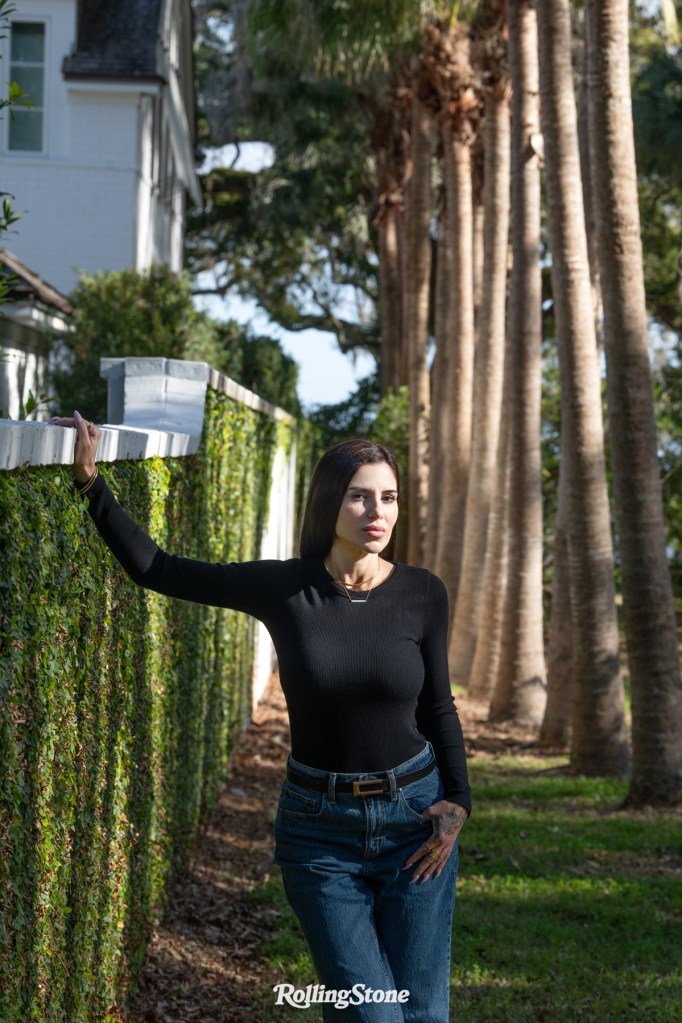
Today, Jennifer Gomez lives in Florida.
This visual sleight of hand worked so well that sometimes even Gomez was amazed. “All of these encounters — with the coin guy, my friends, law enforcement, anyone I encountered who would look at me and then turn around and believe whatever bullshit was coming out of my mouth — started to really frame this idea that perception is crazy,” she says. “I tell people all the time now, ‘Y’all, do not believe what your eyes are telling you. They’re going to tell you that something looks OK, and it could be horrible.’”
There were the neighbors who saw her dragging a safe — an honest-to-God safe — out of a house and, rather than calling the cops, came over and volunteered to help her hoist it into her car, believing her story that she was home from college and annoyed at having to help her mom move the damn thing (turned out there was nothing in the safe but paperwork and birth certificates; Gomez handled it all with gloves and returned the papers to the person’s mailbox). There was the elderly couple who were so concerned about her being lost in such a terrible rainstorm that they insisted she come inside and look through their neighborhood directory to find the right address for where she was going. “They gave me a glass of water,” she says. “And then the freaking man, who was, like, 85, walked me in the pouring rain to my car with an umbrella,” never once imagining that he was sending her on her way to rob one of his neighbors. Sometimes even Gomez got swept up in her own illusion of innocence, like the time she heard a helicopter circling a neighborhood and “I said to myself, ‘Oh, my gosh, there’s a really bad person on the loose, like, it’s probably a murder or something. I’m by myself. I’m a girl. I need to get the hell out of here.’” It didn’t occur to her until later that she’d burgled so many homes in the area in such quick succession that the helicopter may well have been looking for her.
This is not to say that her execution was flawless, that mistakes weren’t made. There was the older guy who walked in on her going through the drawers in his bedroom and who managed to pin her down in the backyard with the help of a neighbor who she says flirted with her shamelessly until the cops arrived. This whole debacle necessitated some time spent in the county jail and another stint in rehab. There was also a fairly hefty addiction to Roxicodone, or as she puts it, “Roxies,” which — during the pill-mill crisis of the time — sucked up much of the cash she kept stashed in shoeboxes in her closet, and also no doubt made her more sloppy and careless.
But none of this deterred her from continuing to burgle. “There was no logic,” she explains. “There was no ‘Hey, you got really good on this one. You got away with it. You need to scale back a bit.’ It didn’t exist. For people who are in active addiction or crime, no amount of ‘Damn, I dodged that bullet’ or ‘Man, this is really risky’ is ever enough to stop you.”
“I was like, ‘I’m good at this, you know? I have more money than all of my peers, and none of you guys even know it.’”
Gomez
Most important, she saw herself as a success, felt that she’d found that thing that set her apart, and took pride in how often things went her way. “I was like, ‘Man, people believe me,’” she says. “Like, ‘I’m good at this, you know? I have more money than all of my peers, and none of you guys even know it, and I’m just walking around like this queenpin.’ It was a power trip.”
Gomez maintains that she never confided in anyone what she was doing. She kept up appearances of running a kiosk that sold bracelets at the mall. She bartended at night. She rented a small apartment and furnished it sensibly. She didn’t buy too many flashy things, and she kept the extent of her pill habit a secret from her family and her boyfriend, a guy she’d met in Ocala in 2010. Kyle Tackett came from a good family that ran a metalworking company with contracts all over the state. When he heard that the bar where they’d met was closing, he was smitten and sentimental enough that he bought it. He wasn’t anything like Sarkisian; he was kind and safe, and Gomez was old enough now that she could see the benefits of those qualities. A few months after they started dating, when Gomez found out she was pregnant, both of them were delighted and started planning for the future — a future, Gomez realized, in which she’d quickly need to clean herself up and bring her secret life as a cat burglar to an end.
Then one week later, on July 29, 2011, Gomez and Tackett were awakened by a knock on the door. “Step out of the doorway, and don’t make any sudden movements,” a female officer said to Gomez while other officers swarmed inside Tackett’s house. Tackett couldn’t believe what was happening right before his eyes; he thought it was all a big mistake. “At the beginning, I was like, ‘Well, this is bullshit, obviously,’” he says. But then he saw the look on Gomez’s face. “I glanced over at her, and she just kind of had her head down. And I was like, ‘Ugggghhhhhh.’”
The Clink
By the time Gomez arrived at Lowell Correctional Institution in November 2012, Chernece Brinson had seen it all and then some. She knew from experience that there were a number of ways that the pretty young things could go wrong. They could take up with a guard and weasel him into getting them all of the drugs they wanted, then spend their time strung out and useless. They could catch the eye of someone’s girlfriend and end up with their face slashed or bashed up in a fit of jealousy. One way or another, they were unlikely to fly under the radar.
And Brinson could tell that this new inmate, Jennifer Gomez, was raging — fighting with other inmates, mouthing off to the guards. Her 10-year sentence would go down hard if she kept that up. Brinson should know: She’d been in lockup for the better part of two decades, since she was arrested for grand-theft auto as a teen. She had spent her early years at Lowell raging too, selling drugs and alcohol, messing around with the officers so that they’d bring her these things to sell. But eventually, she’d found Jesus and purpose, in that order. She wasn’t old, but at Lowell she was an old-timer, someone both guards and inmates respected. And she’d seen enough to be able to size up new inmates quickly: “I could look at people and pretty much tell how their time was gonna end, whether it was gonna go well or whether they was gonna end up shipwrecking. Looking at Jennifer, I saw she had potential.”

Gomez met Chernece Brinson while serving time for her crimes.
Courtesy of Jennifer Gomez
Observing Gomez from afar, Brinson didn’t know that about nine months earlier, while waiting out her case in county jail, Gomez had given birth to a little boy. Shackled to a bed in UF Health Shands Hospital, she’d been able to spend just five days and four nights with her baby before he’d been handed over to an overjoyed and overwhelmed Tackett, and she’d been returned to the custody of St. Johns County, sobbing as they rolled her out to the police car. “I was like, ‘Oh, my gosh, I’m leaving my child in there,’” says Gomez. “Psychologically and physically, your body’s been preparing for a baby. It’s the worst feeling, just the worst. Just a horrible feeling.” The day she met Brinson, in Lima dorm, she’d shown her a picture of her son, who at that point Gomez had mainly only seen over the TV-monitor system they used for visits in county jail. “Oh, my goodness,” said Brinson, looking at the sweet baby with the dollop of dark hair. “We gonna have to make you a mama, girl. You can’t leave here without being a mom.” She gave herself six months to turn Gomez into the type of inmate who could survive her sentence and come out of it better than when she’d gone in.
In fact, that process had already started. Before giving birth, Gomez had seen her crimes as sort of victimless — she knew some of the items she’d stolen probably had sentimental value, but when it came to monetary harm, she’d assumed the homeowners had insurance to pay them back, and it was hard to get worked up about the bottom line of some corporation. But sending her son off with Tackett, knowing that she wouldn’t be there with him, and imagining some stranger rifling around in his room looking for things to steal just like she used to do? “It hit me,” she says. “I started thinking about ‘What would I feel like?’ Like, ‘Who’s gonna protect him? Who’s gonna protect the house that he’s in?’ Kyle’s green. He doesn’t know anything about criminals. And so that’s when I was like, ‘Oh, my gosh, this is why breaking into a house is so terrible. You don’t know who broke in. I know it’s me, but you don’t know it’s me.’ It was a freaking epiphany.”
For the sake of their son, Tackett stuck by Gomez — if not as a partner, then at least as a co-parent and friend. He’d visited her in county jail, listened patiently as she’d come clean about her secret life of crime, about her arrangement with the squirrelly guy, and about how she thought police interest in his illicit activities had clued them into the fact that maybe they should also pay attention to the dark-haired young woman who came and went from his store with such frequency. From a legal perspective, they both knew she was screwed: Items found in her car the day of her arrest were identifiable from recently reported burglaries. Multiple counties were coming for her. Months dragged on, but eventually her lawyer advised her to take the plea deal being offered and plead guilty to dozens of offenses, rather than taking her chances in court with the more than 200 charges with which prosecutors were threatening to stick her. They estimated that she’d stolen more than $7 million of property over the years. Melting gold down, Gomez would have gotten only a fraction of that amount, but hers had still been quite the hustle.

Tackett, Gomez, and their son are pictured during a prison visit.
Courtesy of Jennifer Gomez
At Lowell, Brinson’s guidance was clear: In the ecosystem of the prison, Gomez needed to make herself valuable. She had a high school diploma. The prison needed people who could teach other inmates, help them get their GEDs. Gomez spent most of her sentence teaching grades seven through 12, while Brinson taught grades four through six the next room over. The Pythagorean theorem. The equation of a line. Gomez was good with numbers. And it’s no surprise that she was good with people. “I started graduating 50-year-old women who had been drug dealers their whole lives, who couldn’t read, and I’m teaching them how to read and helping them get their GED,” she says. She found that, as with burglarizing, she took pleasure in mastering a skill, at guiding what people thought, at being in control and good at something. Tackett brought their son to visit every single weekend. The time slowly passed.
After spending more than half of her life in prison, Brinson got out on April 2, 2016, living the first six months in an extended-stay hotel room that Gomez’s mom paid for out of gratitude to the woman who had become her daughter’s best friend and mentor. Four years later, Gomez was released. Tackett picked her up. They took their son to a nearby carnival. The boy rode the carousel, then got off and wrapped his arms around his mother, then got back on and rode the carousel again. As night fell, Tackett dropped Gomez off at the same hotel where Brinson had once lived. They had agreed that Gomez needed time to get on her feet, that she would ease into motherhood slowly. “The first day [out] was not like people think,” says Gomez. “You’re really in a mode of just making it through.”

Brinson and Gomez became roommates after leaving prison.
And she did make it through. Brinson got her a job as a janitor at a gym. “I was like, ‘A janitor? What am I supposed to do as a janitor?’” Gomez says. “But Chernece was like, ‘You just got out of prison, girl! What kind of job you think you’re gonna get?’” So she cleaned toilets and dusted workout equipment. When Sarkisian looked her up again, she kept her distance, turned off by her assessment that “he was the same exact person. He had not changed a bit.” (He died in a shooting incident in 2023.) After a few months on the outside, Gomez moved into a condo with Brinson; they’d been good bunkmates in prison, so they figured they would be good roommates now. Thick as thieves, as they say, they built a life without crime together.
So this is a tough tale of redemption, right? With a hardscrabble happy ending. Yet again, the story could have ended there.
And yet again, it didn’t.
The Present
“How old were we the first time we each got in trouble?” Gomez asks, staring into the camera with a sheepish look and holding up a sign that says “17 YRS. OLD.” Brinson, sitting next to her with a Cheshire grin, holds up her own sign: “8 YRS. OLD.”
“Dang! Eight?” Gomez asks, laughing. “What’d you do when you were eight?”
“I was just trying to get it over with!”
“What’d you do?”
“Stole a car,” Brinson replies melodically over Gomez’s giggles. “I needed a ride!”
Captioned “Prison Questions Answered (Discover the heartwarming story of two best friends who met in prison 14 years ago! #bestfriend #bestfriends #friendgoals #prison),” the TikTok video — part of a series in which Brinson and Gomez answer questions about their crimes — has more than 36,000 likes.
Look, sometimes it’s just in one’s DNA to hustle. Sometimes that’s just how one is wired, and one doesn’t need a mobster boyfriend or a glass cutter or a prison sentence to make that manifest, because the hustle, and being good at the hustle, and feeling good about being good at the hustle is just who one is.
So it stands to reason that Gomez would eventually find her way to social media, the biggest hustle of our times. She started out doing makeup tutorials that approximately no one watched. She hadn’t wanted to talk about her checkered past; she thought it might break the pampered illusion. But then some delivery boxes went missing from her neighbor’s porch, and Gomez realized that, wait, she had knowledge that could be useful here. So, she started talking about home security. And then she started talking about how and why she knew so much about home security. And then she got Brinson on the platforms with her, talking about Jesus and prison and perception, and how their completely different lives landed them in the exact same spot — and, boy, did all of that take off.

Gomez has found an audience on social media.
Last year, the two made enough from TikTok and YouTube to purchase a house together in a tidy, cookie-cutter subdivision in Jacksonville, near the end of a cul-de-sac where small children ride bikes and neighbors wave in greeting and holiday inflatables sway in orderly front yards. There is a room for Brinson, a room for Gomez, and a room for Gomez’s son, who now lives with them full time (“I probably couldn’t even walk into Walmart right now and get hired with a felony record,” says Gomez, “but I walked into a bank and got a [mortgage]”). Tackett comes by every day (“We’re not together romantically, but we’re a family unit,” she says). They have a dog named Princess and three different home-security systems (“Well, one came with the house,” Gomez says with a shrug).
Brinson and Gomez have a keen sense of narrative and comic timing and a playful rapport. As they’ve come to find, their skill and success at telling their stories have probably provided them with the best hustle of all (this article, for instance, very much included). “I feel like people need to tap into whatever they have to offer,” Gomez tells me. “What I had to offer was a story and some wisdom learned.”
And it’s funny, isn’t it? How Gomez’s story has brought her here, providing her son (“the freaking saint, the kid that won’t cuss, won’t be disrespectful, who I don’t have to fight with about grades!”) with the same sort of safety and security she once found so loathsome. Parts of her past now feel so far removed. But, truth be told, there are parts she’s been grateful to come home to.
Pulling into the parking lot of the private Catholic school her son now attends — the one she pays for with her TikTok money — Gomez is sometimes reminded of the hundreds of homes she robbed, of the people she hurt, people not unlike the families who wave to her across the pavement. What would they think when they stumbled on her story?
She takes a deep breath. She smooths her hair. Her story is her hustle now. And all of those parents in their BMWs and blowouts? Maybe they’re just out there hustling, too. If there’s one thing Gomez knows for sure, it’s this: Looks can be deceiving.


