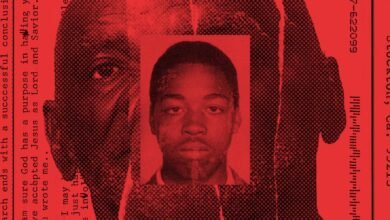

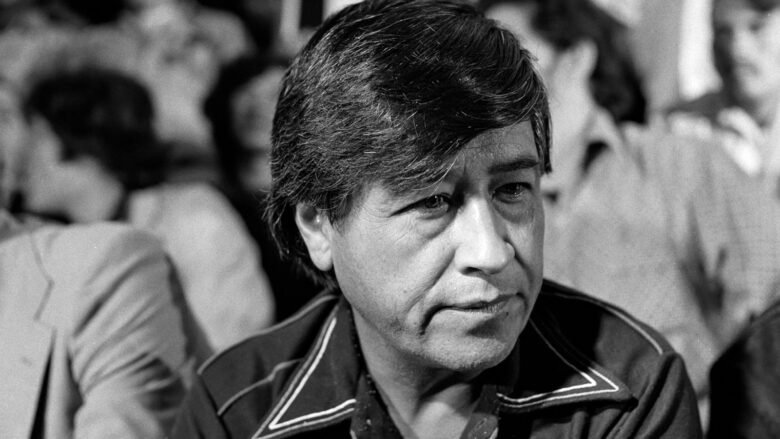
This week, the New York Times reported that one of the most revered figures in the history of the American left — a man whose name is on schools, streets, and state holidays — raped Dolores Huerta. He abused girls as young as 13.
Sixty years of silence, purchased not with threats but with purpose. With love for a cause. With the faith that if they protected him, they were protecting something real. That is what patriarchy does to women who believe; it makes our silence the price of our own liberation.
I am a survivor of childhood sexual assault. I was 10 years old. When I read Dolores Huerta’s words, “I have never identified myself as a victim, but I now understand that I am a survivor — of violence, of sexual abuse, of domineering men who saw me, and other women, as property, or things to control,” I did not read them as a stranger. I read them as a woman who has had to decide what to carry, what to name, and what to finally put down for far too long.
The silence that is asked of survivors is never random. It is extracted in the name of something bigger — the cause, the legacy, the movement — until the cause itself becomes the mechanism of cover-up.
Women’s History Month is supposed to be the 31 days we spend celebrating what women have built. Instead, we are reckoning with what women were forced to hide. We are watching the unraveling of a legacy women literally bled for. And we are supposed to call this history.
It is history. Just not the kind they hang on walls.
Here is what that history actually looks like: Dolores Huerta built the United Farm Workers. She coined “Sí se puede.” She organized boycotts and negotiated contracts and spent her life in service of the dispossessed. And for all of it, Cesar Chavez was the name on the building. He got the schools. He got the state holiday. He got his face on the mural. She got erased.
She got raped.
That sentence is not a metaphor. It is not rhetorical. It is what happened to a woman who gave sixty years to a movement that named itself after the man who assaulted her. The New York Times investigation — 60 interviews, union records, photographs, recordings — also found two other women who were minors when Chavez first abused them. Girls. Farmworkers. The most vulnerable people in the movement that was supposed to be fighting for the most vulnerable people.
I need to say the next thing carefully, because it matters: Cesar Chavez was a champion of workers. He fought for the dispossessed. He was also a predator who used progressive moral authority as cover for abuse. Both of those things are true. And this is the part the left must reckon with.
We do not get to hold Epstein up as evidence of what the right produces while looking away from what the left produced. Epstein’s client list was not partisan. It crossed every ideological line there is. Men who showed up to the right rallies, said the right things, wrote the right checks, and used that credibility as camouflage. And Chavez, a labor hero, a civil rights icon, a man who fought for the dispossessed, used the movement’s moral authority to silence the women he violated.
Here is what I learned about power from my time cleaning other people’s houses and now running one of the largest feminist organizations in the country: Power does not become safe because it is held by people with the right politics. Anytime power accumulates without accountability — regardless of who holds it — it is abused.
I have watched men on the left congratulate themselves for their feminism while building the same unaccountable structures, the same inner circles, the same cultures of deference and silence that they claimed to oppose. I have watched progressive institutions close ranks around powerful leaders the same way conservative ones do. I have watched women in these spaces told, again and again, that now is not the time. That there is too much at stake. That the movement needs this person more than it needs the truth.
I have been doing this work long enough to know what that pressure feels like and what it costs the women who absorb it. And I am here to say: The movement that cannot hold its own accountable is not a movement. It is a protection racket.
Meanwhile, outside this specific reckoning, the war on women is accelerating. The UN Secretary-General warned last year of a “surge in misogyny and a furious kickback against equality.” One in four countries reported active rollbacks of women’s rights in 2024. Project 2026, the Heritage Foundation’s governing blueprint for the year we are currently living in, is a plan for forced motherhood, government-policed gender, and the erasure of every legal protection women have spent generations securing. The manosphere has gone from the fringe to the mainstream, from Reddit to the White House. The backlash is organized. It is funded. It is transnational. And it is counting on us to be too exhausted, too fragmented, and too busy cleaning up after the circular firing squads on our own side to fight it.
“That’s the history of the world. His story is told, hers isn’t,” Dolores Huerta said in an interview in 1995. She was talking about what it meant to have built a movement that history would credit to a man. She did not know yet, or maybe she did, and the weight of it is something I cannot begin to imagine, that the man history credited was also the man who had violated her.
She carried that for 31 more years.
And she put it down this month. In Women’s History Month. While we are simultaneously fighting for the survival of women’s rights against a coordinated national rollback. While the Epstein files are still being suppressed. While a generation of young men is being radicalized online into the belief that women’s equality is an attack on them. While we are out here trying to hold together a movement under conditions that would break most institutions.
Tell me again that the timing is a coincidence. Tell me again that this is not, all of it, every piece of it, from the abuse to the cover-up to the political context it lands in, a single story about what happens to women when men hold all the power and pay no price for how they use it.
I refuse to be surprised. I am Latina, a survivor, a former domestic worker, and the executive director of Women’s March, and I have spent my entire adult life in rooms where I was not supposed to be, refusing to stay quiet for the greater good, and refusing to make myself smaller so that someone else could feel bigger. That is not going to change.
What is going to change is this: we are done protecting the cause at the expense of the women who built it. We are done performing deference to leaders who have not earned it and do not deserve it. We are done being told to wait, to soften, to be patient, to trust the process.
The process produced this. But we are building something else, for women. All of us. Not as a side effect. Not as a constituency to be managed. As the point.
His story has been told long enough.
Ours starts now.
Rachel O’Leary Carmona is the executive director of Women’s March, a movement mobilizing for a feminist future.