
With each day that passes since the start of war between the US, Israel and Iran, the impact on travellers increases.
On Tuesday 7 April, Air New Zealand has made more cuts to its domestic flight network in May and June “due to the ongoing impact of high jet fuel costs” – grounding one flight in 25.
A spokesperson for the airline said: “We have worked hard to keep disruption to a minimum, with the vast majority of impacted customers still travelling on the same day.
“These changes are relatively small compared to others in the New Zealand market, where some airlines are reducing capacity by more than 10 per cent.
“Like airlines globally, we’re experiencing jet fuel prices that are more than double what they would usually be. This is driving higher costs across the industry, and we’ve made further increases to some airfares to help manage this.”
On the same day, Australia’s government said the nation had 30 days’ supply of jet fuel remaining.
The announcements come as some Asian countries are grounding flights and European airlines are making plans to deal with shortages.
Michael O’Leary, chief executive of Ryanair, has warned of “the risk of supply disruptions in Europe in May and June” unless the war ends quickly.
Could your holiday flight be cancelled due to lack of fuel, or because the price has risen so sharply? That is the question increasingly many people are asking – and wondering about their rights amid such uncertainty.
These are the key questions and answers.
How bad is the fuel shortage?
In some parts of the world, particularly in Asia, flight cuts have been deep and steep surcharges have been added to air fares.
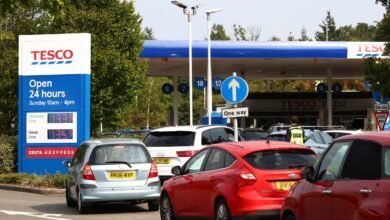
So far the impact on UK passengers has been limited. The small Channel Islands airline, Aurigny, has grounded some flights linking Britain with Guernsey and applied a £2 surcharge on new bookings. Skybus, the Isles of Scilly carrier, has axed its link between London Gatwick and Newquay in Cornwall.
Major British and Irish airlines are confident that supplies are sufficient to cover the rest of April. Beyond that, visibility is more difficult.
Ryanair boss Michael O’Leary told Sky News: “The fuel companies are happy there won’t be disruption till early May.
“But if the war continues, we do run the risk of supply disruptions in Europe in May and June, and obviously we hope the war will finish sooner than that and the risk to supply will be eliminated.
“If the war finishes by April and the Strait of Hormuz reopens, then there is almost no risk to supply. If the war continues, and the disruption to supply continues, we think there is a reasonable risk of some low level – maybe 10 to 25 per cent of our supplies – might be at risk through May and June.”
The Department for Energy Security and Net Zero told The Independent: “Jet fuel shipments are continuing to arrive in the UK. The UK receives imports of jet fuel from India, US and the Netherlands as well as smaller amounts from a range of other countries.”
The picture is more concerning in parts of Asia, which are largely dependent on supplies of aviation fuel from the Gulf.
Airlines in Vietnam and the Philippines are cancelling some domestic and international flights. Pakistan has told foreign pilots to arrive with as much fuel as possible for their return journey, saying: “Due to disruption in supply chain of jet fuel, as a precautionary measure airlines are advised to carry maximum fuel from abroad and minimise uplift of jet fuel from Pakistan.”
What about British or European airlines flying from cities in Asia?
The Pakistan warning is significant. There is no problem with bringing in fuel on the 90-minute hop from Dubai to Karachi. This is a practice known as “tankering”. But an 11-hour flight from Heathrow to Islamabad is different. Individual airports may run short of fuel. Were this to happen – as it already is in Cuba due to the US blockade – airlines continue to fly, but typically they will stop off somewhere else to take on more fuel.
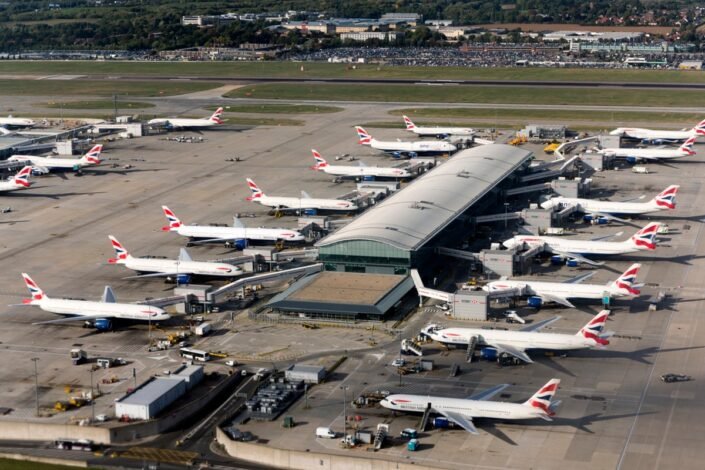
Oddly at the same time as fuel is getting scarce, European airlines including British Airways and Virgin Atlantic are stepping up flights to Asia, to cash in on the inability of the Gulf airlines to operate full schedules – and the reluctance of passengers to change planes in hubs which are on the Foreign Office no-go list – including Dubai, Abu Dhabi and Doha.
US and Scandinavian airlines are cancelling flights?
Yes, but that is much more of a financial issue. Airlines that are not locked into low fuel prices are seeing their costs rise very steeply. So United of the US and SAS, the Scandinavian airline, have announced the cancellation of thousands of flights between them – but they are departures that have switched from marginally profitable to loss-making due to the rising price of aviation fuel.
What happens if my flight is cancelled?
Under air passengers’ rights rules, travellers whose flights are departing from the UK or the EU – or on British or European airlines from anywhere in the world – have strong rights. They are entitled to be flown to their destination as close to the original schedule as possible, on any airline with seats available, and to be provided with meals and hotels if there is a significant delay.
Could we face surcharges?
All the big airlines operating from the UK – British Airways, easyJet, Jet2, Ryanair and Virgin Atlantic – have locked into lower fuel prices. None of the airlines intends to surcharge existing passengers.
There is no convention of asking people who have paid in full for their flights to pay more. However, that’s not the case for package holidays.
“Hedging” the price of fuel comes at a cost and plenty of firms choose not to lock into low fares. They are therefore exposed to the full weight of the approximate doubling of the oil price.
Under the Package Travel Regulations, travel firms are allowed to ask for more money if “the price of the carriage of passengers resulting from the cost of fuel” has risen. There is no upper limit to the amount that the travel firm can demand. But if the proposed surcharge is eight per cent or more, then you have the right to get your money back.
Many surcharges turn out to be eight per cent, representing an extra £80 on a £1,000 holiday.
For flights bought aboard, surcharges are more likely. Bo Lingam, chief executive of the major budget airline AirAsia X said: “We have implemented carefully calibrated fare adjustments, including a one-off fuel surcharge across the network.”
Will we be paying more for flights later in the year?
Longer term, higher fares are likely. As airlines’ fuel hedging arrangements unwind, future supplies will be more expensive – pushing up costs and therefore fares.
Kenton Jarvis, chief executive of easyJet, told The Independent: “The industry has no choice. It’s a low-margin, highly competitive sector. We make about £7 per seat. If fuel goes up £10, you have to respond.”
Can travellers ‘panic buy’ flights and holidays – and would you advise it?
I never advise anybody to panic. There is, though, an argument for committing to the flights you will take over the coming months in the knowledge that you will get strong consumer protection. For example I have just bought a ticket for a princely £40 to Cyprus in May on Wizz Air, and one coming back from Georgia on easyJet later the same month.
I fully expect those flights to go ahead, but should the airline cancel I know that under air passenger rights rules, the carrier has to provide an alternative departure for me at no extra cost.
Read more: British Airways to allow voice and video calls on its Starlink-enabled flights