

The hairs on the back of my neck tingle as I stare at the mourning bracelet once worn by Charlotte Brontë. Its purple-red garnet glimmers from the centre of a band woven with the hair of her sisters, Emily and Anne. Moments before, while touring the other displays of the Brontë Parsonage Museum, I’d eyeballed the sofa where Wuthering Heights author Emily Brontë lost her life to tuberculosis, aged just 30. Museum volunteers around me chat about Emerald Fennell’s Wuthering Heights film adaptation and one tells me some 500 visitors walked through these doors a day after the film’s release – close to double the numbers they received over Valentine’s Day weekend last year.
In 2026, many travellers will be set-jetting across the Yorkshire Dales to see where Margot Robbie and Jacob Elordi acted out the latest film’s tempestuous scenes. But after a surge in sales of the original novel, there will be others, like me, who’ll flock to Haworth for a Brontë inspired literary tour, with the Brontë’s parsonage home at its heart. The mourning bracelet that captures my attention inspired the replica Robbie wore to the film’s premiere. The surrounding village and moorlands, meanwhile, make up Brontë Country, the real inspiration for Wuthering Heights.
It doesn’t take long for me to pull on my hiking boots and make for Haworth Moor. It’s here where the Brontës would roam with their dog Grasper, playing “brigands and bandits” and these wild, heather-clad heights instantly take me back to my Yorkshire childhood.
-Visit-Bradford.JPG)
Read more: A tour of the Wuthering Heights filming locations in the Yorkshire Moors
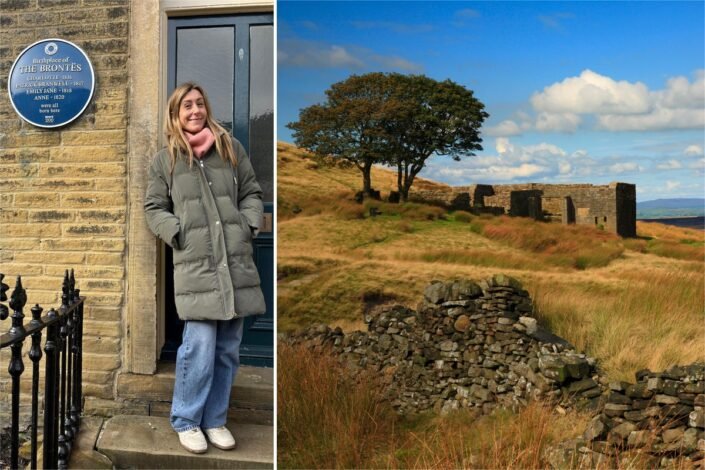
From Penistone Country Park, just outside the village, I ramble along sodden, rock-strewn bridleways to reach the ale-coloured Brontë falls that gushes into Sladen Beck. I stand on its so-called “Brontë Bridge” beside skeletal trees and spot “Charlotte’s stone” where the namesake author purportedly sat. The ascent from here, past boggy ferns and dilapidated dry-stone walls, takes me to the loftier heights of Top Withens. Although the now-demolished Gothic High Sunderland Hall in Halifax was the apparent inspiration for the Earnshaw’s home, this ruined farmhouse is believed to have inspired Emily’s Wuthering Heights setting. Thrushcross Grange was possibly inspired by nearby Ponden Hall. There’s a beauty to the bleakness up here, even when an icy squall freezes my cheeks during the descent.
My stay in Haworth is Steam View Cottage, a stone’s throw from Haworth’s Grade II-listed Central Park. Its claw-foot bath provides post-hike soaks, and two of its bedrooms cocoon guests beneath third-floor eaves. In the living room, the owner has filled a dresser with an array of Brontë books and from the cottage windows, I spot the Keighley & Worth Valley steam train – of The Railway Children fame – tooting through the valley.
A short walk from here is the steep cobbled Main Street where traditional millstone grit shops and inns, blackened by the soot of the 19th century’s textile mills, speak to Haworth’s industrial past. There are nods to the Brontës at every turn: the shop where Emily bought her stationary; the Barraclough clockmakers (now the Hawthorn restaurant) that made the Brontë’s grandfather clock, and the Black Bull inn where punters sip Brontë-themed ales and snap the ill-fated Brontë brother Branwell’s chair. Those keen to flex their writing skills can attend author’s talks at the Wave of Nostalgia bookshop or check out the Brontë Writing Centre that holds courses throughout the year.
Read more: Why York is a haven for book lovers
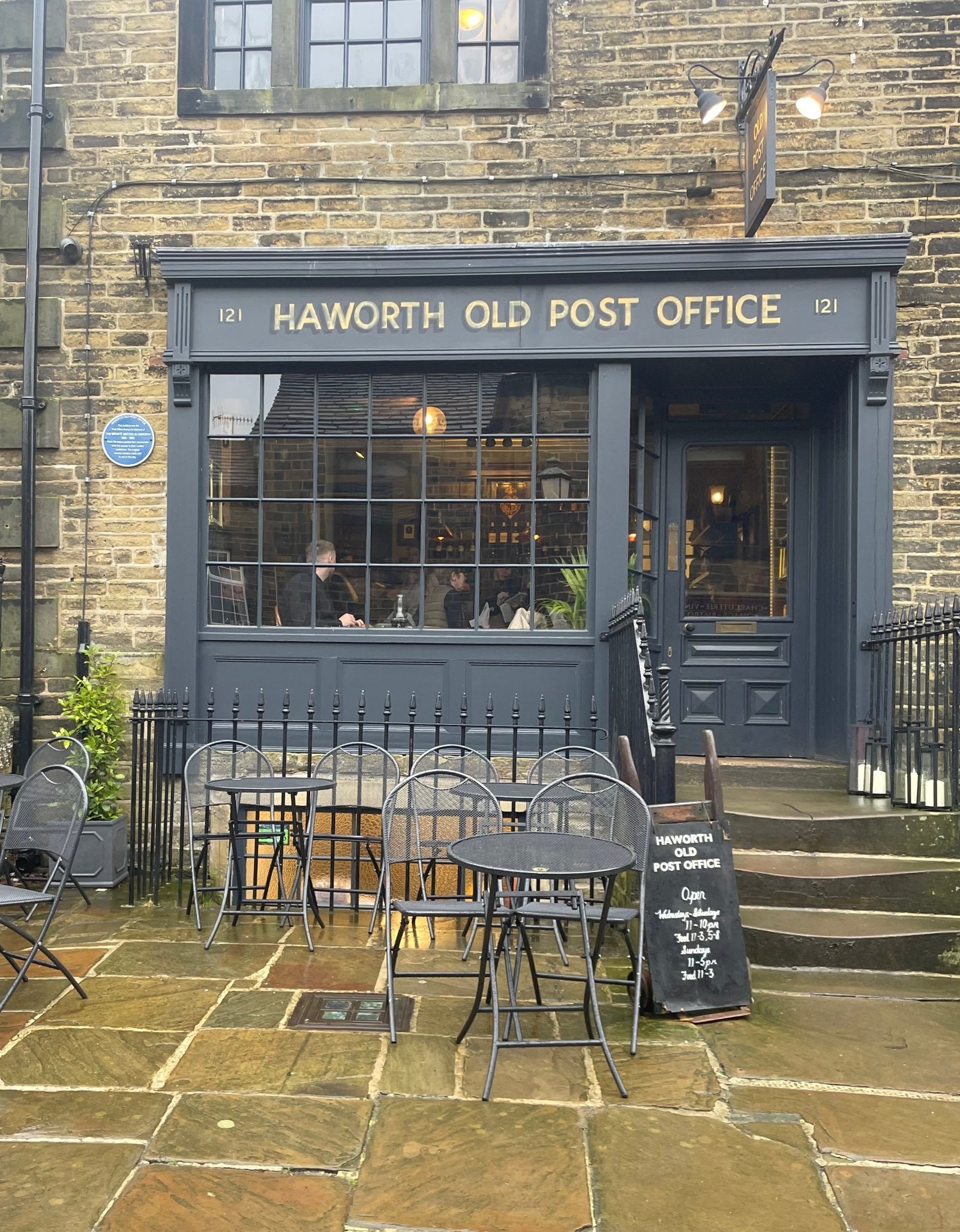
At the top of the street is the parsonage, housing the largest collection of Brontë family artefacts and now opening six days a week in response to its rise in popularity. Next door is the old school room which Patrick Brontë, a champion for education, helped build. My favourite stop is the Old Post Office where the sisters once sent off their manuscripts to publishers under the pen names Currer, Ellis and Acton Bell. It’s now a characterful café where I savour a breakfast bap and Yorkshire brew, paid for over the original Victorian counter. I also visit St Michaels and All Angels’ church to see the Brontë Family Vault where all members of the Brontë family – except Anne – are buried.
In the nearby village of Keighley, I head to East Riddlesden Hall, a gothic 17th-century farm manor that instantly evokes Wuthering Heights vibes. It was saved from demolition and gifted to the National Trust by the Briggs family who helped form The Brontë Society in 1893.
Inside, its Lights, Camera, Brontë: East Riddlesden Hall on Screen exhibition (free with the £7 venue entry), spotlights the many Wuthering Heights adaptations filmed here. This includes the now-lost 1920s silent drama whose original screenplay is on display. I see the atmospheric Great Hall, with its deep-set fireplace, that inspired filmmakers of the 1992 adaptation, starring Ralph Fiennes (they created a near-exact replica up on the moors). Many believe the room’s 17th-century oak dresser, brought here from Ponden Hall, could be the “pewter-bearing dresser”, from the original book.
Read more: Best hotels in York for a history-filled city break
My last stop is The Brontë Birthplace, Thornton, on the outskirts of Bradford. This was where Patrick Brontë spent “my happiest years” from 1815-1820 while serving as curator at the nearby, now-ruined, Bell Chapel. Queen Camilla officially opened the home as a Community Benefit Society-run museum after a nine-month restoration last May (self-guided tours from £6.50).
As general manager Anna Gibson shows me around its Regency-styled rooms, she points out horsehair from the building’s original plasterwork and a fireplace in the family parlour, (now the museum café), in front of which the four youngest Brontë children were reportedly born.
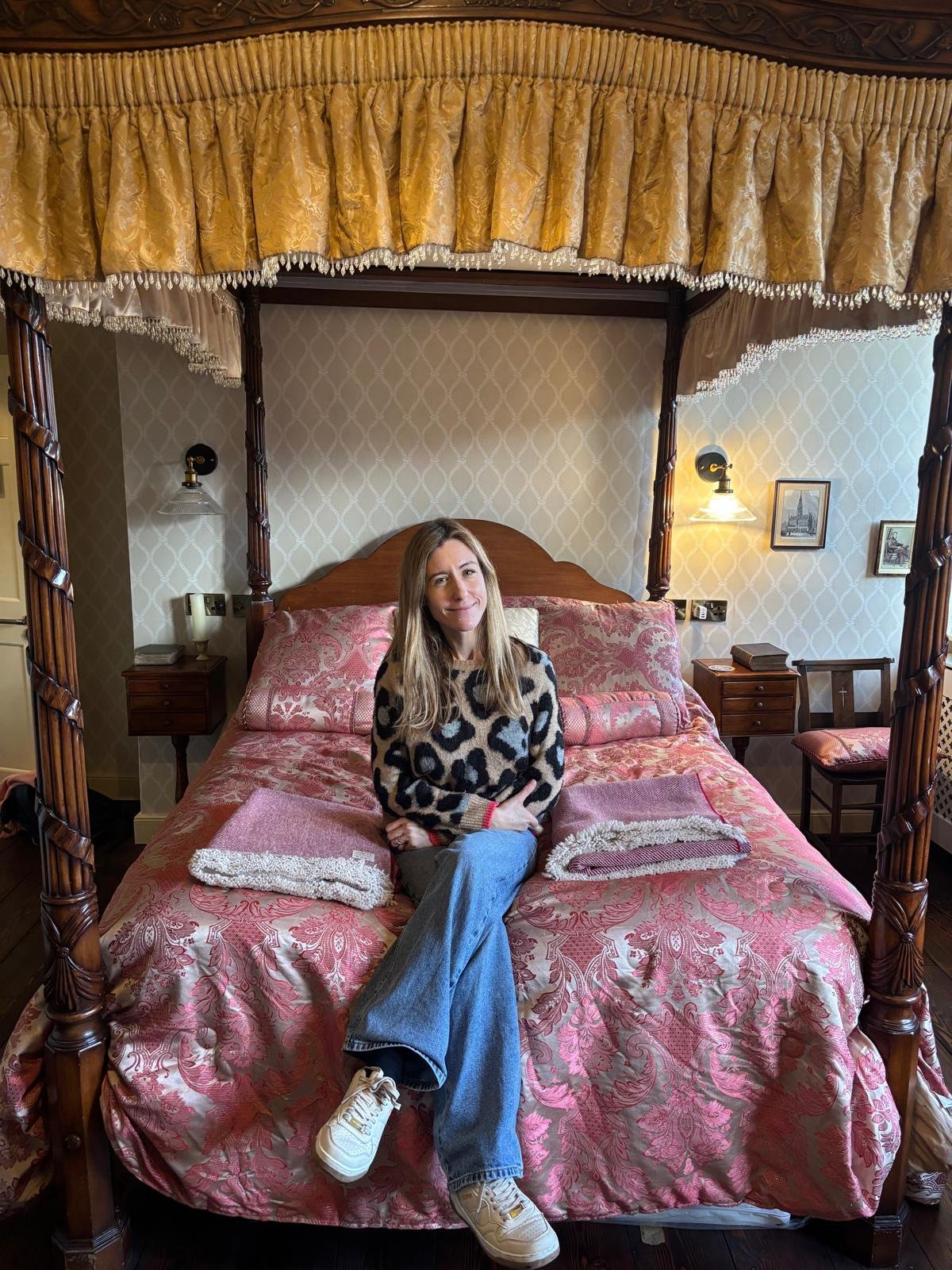
I can’t wait to tell my friends about the upstairs en suite rooms – named, you guessed it, Charlotte, Emily and Anne – where guests can now stay. I sleep in Charlotte’s room, now furnished with a plush four poster bed draped in pink and gold Jacquard style bedding; a chaise longue and pictures of Charlotte and her father. It feels quite surreal to imagine that all six of the Brontë siblings once slept here. And it feels like an apt ending to a journey that proves the Brontës’ literacy legacy is still going strong, some 200 years on.
How to do it
Sykes Holiday Cottages offers a two-night stay at Steam View Cottage, Haworth, from £386.
Stay in Charlotte’s Room at the Brontë Birthplace from £223 a night.
Lucy’s trip was supported by Sykes Holiday Cottages, the Brontë Parsonage Museum, the National Trust and the Brontë Birthplace, Thornton.