

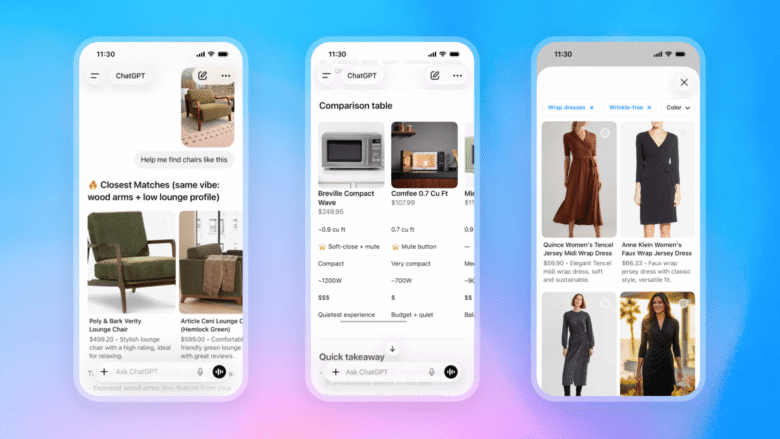
OpenAI’s plans to make ChatGPT into an e-commerce hub aren’t exactly panning out—at least, not yet. In an announcement on Tuesday, the company revealed that it’s pivoting away from a recently launched feature that let users buy items directly from the chatbot’s interface.
OpenAI originally launched buying capabilities in ChatGPT last year—positioning itself as a “shopping assistant” that could connect consumers to relevant vendors. A feature called “Instant Checkout” launched in September and encouraged users to talk with the chatbot about what they were looking to buy and, much like a traditional e-commerce site, add products to a checkout cart within ChatGPT itself. The items were purchased from the vendors themselves, but ChatGPT acted as a portal for those purchases.
Instant Checkout has not been a huge success, however, because, on Tuesday—amidst other update announcements relevant to ChatGPT’s shopping experience—OpenAI said that it would be scaling back the feature.
“We’ve found that the initial version of Instant Checkout did not offer the level of flexibility that we aspire to provide, so we’re allowing merchants to use their own checkout experiences while we focus our efforts on product discovery,” the company explained in a blog post. OpenAI clarified to TechCrunch that merchants would still have the option of incorporating the feature for the time being through apps within ChatGPT.
An OpenAI spokesperson said that the company would be deprioritizing the development of Instant Checkout as a standalone feature and that, instead, it planned to prioritize the development of product discovery for consumers. OpenAI would continue to support a variety of checkout paths, including through merchants’ own websites, they said.
The Information and CNBC had previously reported that OpenAI’s new plan was for merchants to create their own apps within ChatGPT, which would then route users to checkout experiences at the merchants’ respective websites. A source who spoke with The Information noted that ChatGPT users simply “weren’t using the chatbot to actually help them make purchases,” and a study from October that looked at referral traffic from ChatGPT found that e-commerce sites were not making much money from ChatGPT users.
Instead of transforming ChatGPT into a shopping portal, what OpenAI is doing now is crafting the chatbot into a centralized hub of consumer information. That way, online shoppers will see it as a kind of intermediary research tool that can help them decide what product to ultimately buy.
Techcrunch event
San Francisco, CA
|
October 13-15, 2026
This shopping experience is powered by its Agentic Commerce Protocol (ACP), which is its open standard for e-commerce, which the company developed in partnership with fintech giant Stripe. The protocol utilizes data provided by participating merchants.
Going forward, OpenAI said that ChatGPT would provide more detailed information about products—showcasing side-by-side pictures, while also providing other comparative metrics for each item—like prices, features, and reviews.