

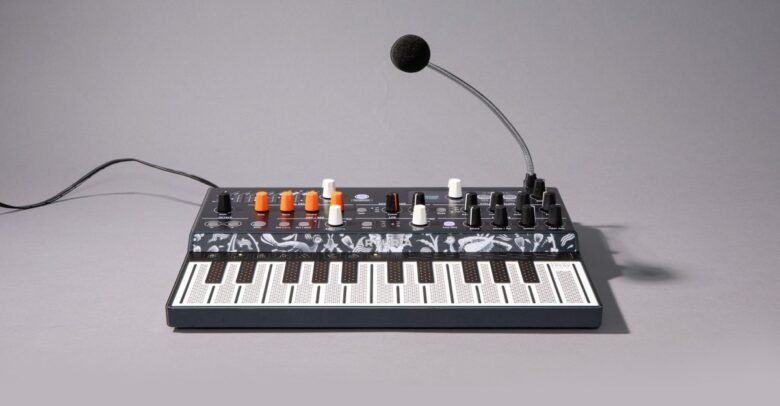
The vocoder was never supposed to be a revolution in music. It wasn’t supposed to be anything in music, really. Its development began a century ago, when an engineer at Bell Labs was looking for a simpler way to send phone calls across copper telephone lines. The engineer, Homer Dudley, built some pretty neat technology that could both capture and synthesize the human voice.
As so much great tech does, the vocoder immediately took on a life of its own. It played a key role in World War II, enabling secret communications across the ocean. And then, only a few years later, it started to become a musical phenomenon. At first a few artists were intrigued by the ability to play their voice like an instrument. Then everybody was. And we never looked back.
On this episode of Version History, we tell the many stories of the vocoder. David Pierce is joined by Switched on Pop co-host and music journalist Charlie Harding, along with Dave 1 and P-Thugg, who perform as legendary electro-funk duo Chromeo. Together, the group explores how the vocoder became so popular, and why musicians gravitate to it — and to similar tech like Auto-Tune and the Talkbox. Dave and Pee also brought a vocoder and a talkbox to the studio with them, and have some serious demonstrating to do.
This is the third episode of the third season of Version History. Here’s how to get every episode, and all our other fun stuff, as soon as it drops:
If you want to hear some of Charlie’s and Chromeo’s favorite vocoder tracks, you’re going to want to check out this playlist:
And if you want to know more about the history of the vocoder, from Bell Labs to World War II to music studios everywhere, here are some links to get you started: