
T
he smugglers were halfway to Key West, Florida, with a boat full of bad weed when the winds turned against them. The winds had not been kind the whole trip, and when you’re running weed in a 61-foot steel-hull sailboat, you need the wind on your side. Harvey Prager had been on watch for hours, steering through lashing rain and 20-foot waves in the Yucatan Channel. Watches were four-hour shifts, day in, day out. Belowdecks, crew members tried to sleep despite the violent pitching of their ship, called The Escape. On deck, Prager knew he had to be vigilant. The passage was a good place to get snatched by the Coast Guard, or worse, get run over by a cargo ship. The Escape had a powerful engine that recharged the batteries that powered the crew’s rudimentary lights and equipment, but it was struggling, chewing through diesel as it pushed the ship up and down through mountainous waves. The end was in sight, though: If they could grind their way through the channel, dodge the container ships and cops, they’d catch the Gulf Stream winds and be able to shoot straight north to the coast of Maine, where they’d tuck the boat into a quiet little inlet, offload the weed, and rake in the cash, living like kings in New England just as the summer of 1976 came to a close. That’s what Prager was dreaming of, at least, before the radio crackled below.
The radio, a battered old Zenith Trans-Oceanic, was their only link to the outside world, bringing them occasional weather reports and little else. They had no cell phones, no radar, no satellite uplink. They navigated by sextant and map. If they went down, no one would ever find them, and the radio told them the weather was about to go from bad to worse. A hurricane had formed north of the Bahamas, swelling in size and hooking west, cutting off their route to Maine and leaving the smugglers adrift at sea with no port to call home.
Prager and the other three crew members huddled together below deck to sketch out a plan. Mike “Cochise” Pace, a vagabond veteran who’d grown up on the water and was the group’s elected captain, quickly realized they’d have to make for the east coast of Florida, where a friend had a vacation rental with a dock long enough to tie up The Escape and unload. They’d used his dock before, but hadn’t spoken to him in months; it was a risk they’d have to take. They sailed north, hugging the coast of Florida, and cut into the swampy St. Mary’s River delta right on the border with Georgia, where they tied up at the dock just before midnight. In the distance, a light switched on. A man appeared from inside the house and ambled down to the dock. As he got closer, they realized it wasn’t their buddy. He had moved. They’d just tied up a ship loaded with 7,000 pounds of weed in a stranger’s backyard.
The stranger, it turned out, was friendly. The next morning, his school-age son came out of the house and wanted to check out the boat. The smugglers let him aboard, and the boy clambered around hatches that, if opened, would reveal dozens of felonies worth of illicit cargo. Prager hitched a ride to town, where he met up with some friends, rented a huge yellow Ryder moving truck, and assemble an emergency ground crew to help the sailors unload.
After several more days of aimless, anxious sailing through the Florida marsh, the smugglers finally found an inlet secluded and accessible enough to unload, off a half-developed neighborhood called Pirates’ Wood. They packed the bales into the Ryder truck. The third crew member, who went by Kaumu, hopped into the cab, with Prager riding shotgun. Cochise stayed with The Escape, casting off for the now-calm waters of the Bahamas. The worst was over, Prager thought, as he drifted off to sleep in the passenger seat of the Ryder.
A few minutes later, he was jolted awake. The border between Florida and Georgia is rife with agricultural checkpoints. Kaumu was adamant they should follow the rules and try to talk their way through. Prager, shaking off sleep, wanted to blow right past with the rest of the non-commercial traffic. But Kaumu was at the wheel. The truck stopped. The inspectors approached and asked to look in the back. The desperate smugglers lied saying they were transporting furniture and didn’t have the key. They’d have to call their boss from a truck stop down the road to get him to come open it up.
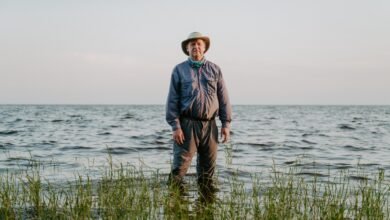
Today, Prager lives in Brooklyn, in the same apartment building as the story’s author.
Sacha Lecca
Until then, smuggling weed had been a grand adventure, an escape from a society that had just thrown Prager’s generation into a meat grinder in Vietnam, a repudiation of the crooked politicians and backward preachers and greedy capitalists who were running the world. But now, the risks were real. The truck, Prager realized with a sick flash of terror, had been rented under his name. His legal name. There were only two choices left: Open the truck, turn himself in, and accept the punishment society handed down — or run.
This, Prager tells me years later, was the moment he became a pirate. He and Kaumu walked up to the nearest big-rig driver and asked for a ride. The driver was headed north, which was good enough for the smugglers. They ran, leaving a pair of unsuspecting, bored state troopers with a truck full of Colombian weed on the side of the road.
Over the next 10 years, Prager would become the kingpin of a multimillion-dollar marijuana smuggling organization, living under constant investigation and indictment, staying one step ahead of the law in New York City, Boston, Key West, and all across the Caribbean, eventually coordinating a network of half a dozen ships running weed from Colombia to the northeastern United States. The men and women under his employ were a rag-tag gang of dreamers and drifters, brought together by a love for adventure, a disdain for the society that had thrown their friends away in Vietnam, and a desire to spread the gospel of ganja. From 1979 to the mid-1980s, they lived like kings across the Caribbean, buying property and planes and partying nightly with Jimmy Buffett and other patron saints of the counterculture. Prager’s empire, such that it was, was one of many operations that gave birth to a golden era of the drug trade, in the final years before organized cartels moved in and went to war with the Reagan administration, as America’s appetites shifted from marijuana to cocaine and a new world of enforcement and danger drove independent smugglers into the ground. They were, as one prosecutor said during Prager’s sentencing, years later, “the last of the great amateurs.”
“We smuggled marijuana because we believed in it,” Prager tells me. “We knew there was no reason in the world that it should be illegal.”
Prager’s extraordinary court case, which resulted in one of the most unique sentences ever passed down, was a media frenzy in the late 1980s. You’re reading the full story now — how a Harvard fellow built a drug empire from Colombia to Cambridge — not through any feat of reporting on my part, but because of a very simple chance of fate: Harvey Prager lives in the apartment below mine, in a six-unit brownstone in Bedford-Stuyvesant, Brooklyn, with a high-school sweetheart he reconnected with decades after his time as a criminal on the run across the globe.
The Snake Pit
KEY WEST, FLORIDA WAS a smuggler’s paradise. In the mid-1970s, the long net of the Florida Keys swept up a generation of countercultural refuse in a web of free love, plentiful drugs, and cheap booze. The city was a warren of bars and fishing markets, which captivated writers like Jim Harrison, Guy De la Valdéne, and Richard Brautigan, who drank in front of buskers like a young Jimmy Buffett. Locals remember a lady who had a beer-drinking, toilet-trained ferret she’d take around to the bars and a small-town mayor who water-skied to Cuba on a dare. The city was both the end of the world and the center of it, a short sail or flight from both the booming metropolis of Miami and the islands around the Caribbean.
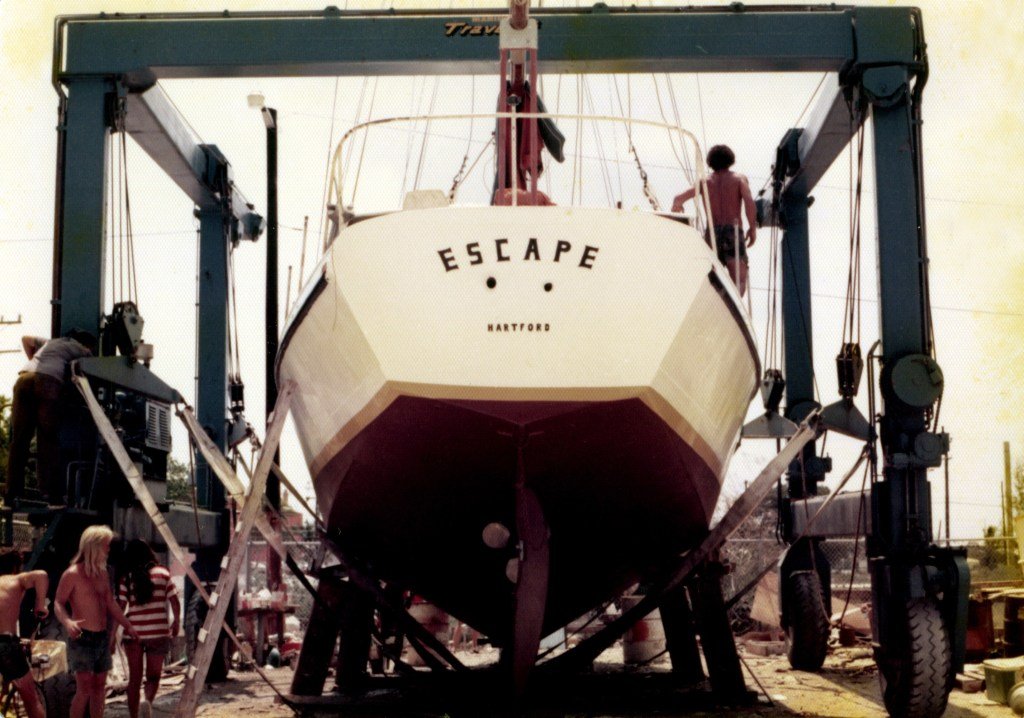
The Escape was the vessel Prager used for years.
Courtesy of Harvey Prager
Prager and the original crew — Jake “Pigpen” Keenan and Mike “Cochise” Pace — fit right in when they limped The Escape into a Stock Island shipyard in 1975. They were bums, more or less, living in a shipyard for a few dollars a week and sleeping on the ground underneath their boat. By day, they labored to retrofit The Escape to survive the roughly 1,500-mile journey to the Colombian coastline. In the evenings, they’d crawl out from under the hull and mosey over to Mallory Square, a broad plaza in Key West’s downtown where locals gathered to bake in the last rays of sun and a haze of pot smoke. After dark, they’d sometimes hit the bars. The heart of the scene was the Snake Pit, a bar technically named the Old Anchor Inn, which took up the bottom floor of a dilapidated clapboard-siding building on Duval Street, a few blocks from the square. In an inscription outside of the current building, writer Tom Corcoran claims Buffett once escaped the apartment upstairs from the bar after a lovers’ quarrel and that patrons often stood on bricks to stay out of runoff from the overflowing bathrooms while gambling on games of pool. The smugglers ran wild in Key West for about six months, swilling beer, sweating underneath the boat as they hollowed out the hull to carry weed. They became regulars at La Sorpresa, a Cuban joint off A1A, where they all fell in love with a waitress named Bianca.
Prager and Keenan had met a few years earlier, when Prager had just left a doctorate program at Harvard. Keenan had the hookup with both Cambridge’s flourishing party scene and a handful of small-time regional pot dealers, who regaled the pair with tales of running weed in pickup trucks over the Mexican border. In smoky house parties and late-night soaks at the bar, Prager and Keenan bonded the way only underemployed dreamers can, and a plan emerged: Buy a boat, travel the seas, and maybe run a little reefer. They borrowed cash from the local dealers to finance the boat and enlisted Pace, Keenan’s childhood friend who had grown up on the water, to help sail it. When they first bought The Escape, it was barely seaworthy, and the smugglers limped it just far enough to find a berth in Key West.
Smuggling was not, for any of the three men, a natural career path. They were potheads, sure, but most of the crew had spent time at elite institutions or in above-board jobs. When Prager left Harvard, he’d been on track for a flourishing career in academia, coming off teaching stints in Argentina and a summa cum laude undergraduate degree from Bowdoin College in Maine. Keenan had spent time in the Peace Corps and had drifted around the world afterward, coming away with the conception that Americans’ ignorance of other cultures had led the country directly into the wood chipper of Vietnam. It was 1974: The president was a crook, their friends were dying, and the previous decade of free love and expression seemed far away.
“We didn’t know what came next,” Keenan tells me. “Should we go to a commune, should we study more … Everything felt like selling out or running away. The ideas of the Sixties didn’t really have a compass.”
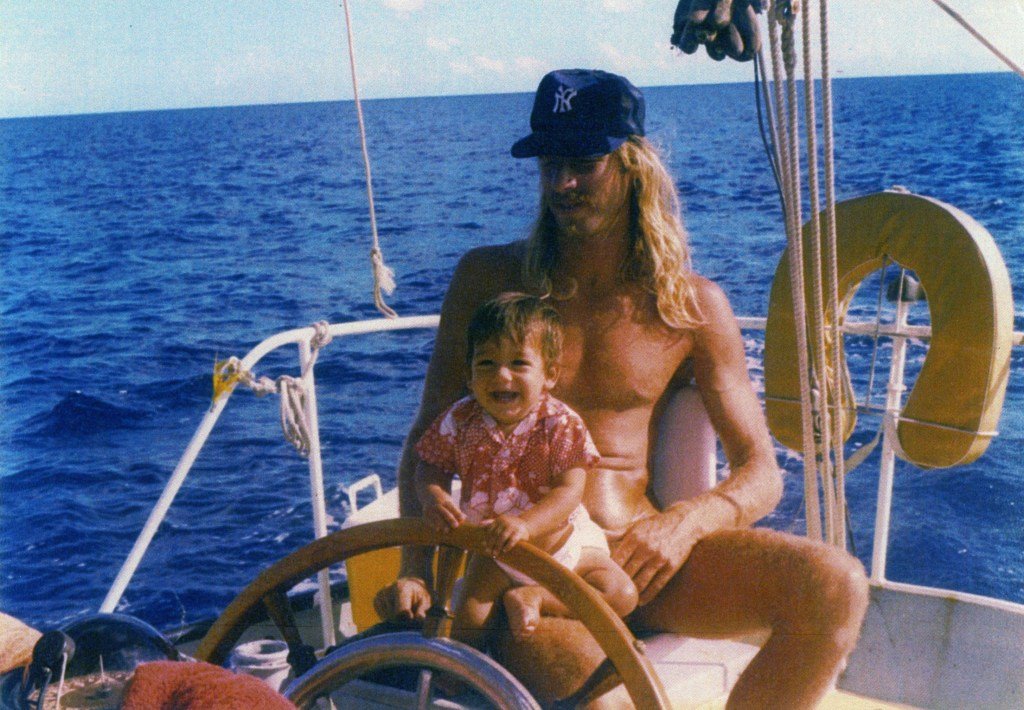
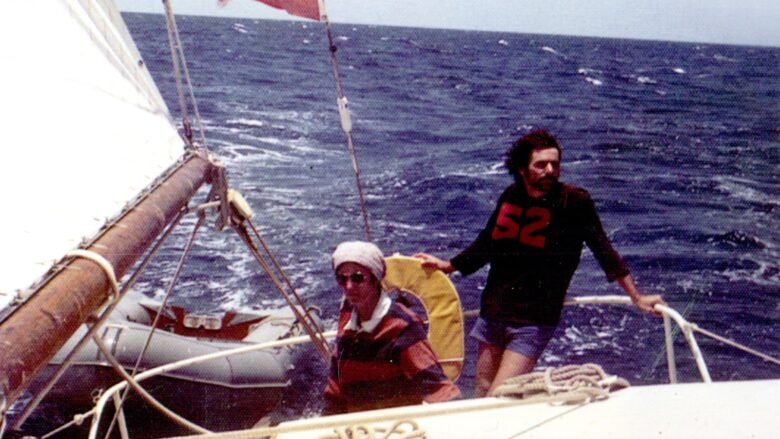
Mike “Cochise” Pace (with his son Simon in 1977) was one of Prager’s original crew members and was elected captain of the group early on.
Courtesy of Harvey Prager
For a while, smuggling was the cure. The group’s first smuggle went off without a hitch — as Pace, Keenan, and Prager ran a load of around 7,000 pounds of pot from Colombia into Maine. The second trip, of course, went disastrously wrong, but less than a year later, Prager, Cochise, and two other crew members made the run for the third time in as many years, this time netting close to 10,000 pounds of product and successfully running it to Florida. The proceeds paid off the loss of the second smuggle and, crucially, fulfilled the original trio’s obligations to the small-time dealer who had fronted them the cash to buy The Escape in return for a commitment to two successful smuggles. Prager and Cochise found themselves the masters of a capable smuggling vessel, with hundreds of thousands of dollars in their pockets and no responsibilities to anyone. It was time, Prager thought, to strike out on their own.
Kings of the Caribbean
MICK FLEETWOOD REALLY WANTED TO drive. The problem was, the roads on Saint Barthélemy island were narrow, winding, and pitch-dark — take a corner too fast, and you’d end up off a cliff into the sea. Prager knew the roads, of course: This was his island, one he’d built a life on with millions of dollars in drug money. The problem was that he was drunk — and so was Fleetwood. The two men argued over who was closer to some shred of sobriety and reached a compromise: Fleetwood would take the wheel, and Prager would hang on for dear life in the passenger seat of his own car. (A rep for Fleetwood didn’t respond to interview requests.)
“We smuggled marijuana because we believed in it. We knew there was no reason in the world that it should be illegal.”
Harvey Prager
One thing the two men could agree on was that this whole predicament was Jimmy Buffett’s fault. The night started like many others Prager had in the remote paradise of St. Barts. He finished work on the house he was constructing on the top of the hill and puttered over to one of the bars — in this case, Autour Du Rocher, a tile-and-brick discotheque on a volcanic bluff overlooking the ocean. When he got there, he settled in with the regulars, which, in the early Eighties, included Buffett, a co-owner of the bar. Prager sat down at the table and ordered a drink, but a quiet night wasn’t on the cards. Buffett was hosting Fleetwood that weekend, and the two men got it into their heads that they would play a show: After all, Autour du Rocher had the sound system right there — why not drag it outside and give the whole island some tunes? They brought speakers, keyboards, and a drum kit outside, and Fleetwood and Buffett cobbled together a band. By the end of the show, it seemed like the whole island was drunk. That night, Prager and Fleetwood made it to their respective beds in one piece.
By day, Prager worked on the house he was building on the island, stopping occasionally for beers at Le Select, an infamous watering hole by St. Bart’s harbor. “If you were looking for someone or wanted somebody to find you, you’d just hang out at the Select,” Prager remembers, where “naked hippie kids would be crawling around the floor and Beatniks from the Fifties would be planning revolutions.”
Pace and Bianca, then married, lived nearby on Saint Thomas, and their young son Simon was childhood playmates with Buffett’s daughter Savannah when they visited St. Barts on holidays. (Bianca and Savannah declined to comment.) Prager spent most of his time on St. Barts, but wasn’t a stranger to the United States: As the organization grew, he says, it got harder to move the money than the weed. Prager flew between the U.S. and Caribbean with cash strapped to his body. He could conceal $100,000 each trip — after trading duffle bags full of small bills for stacks of hundreds at seedy money-laundering shops in New York City’s outer boroughs. Prager was deeply interested in the intricacies of the growing process, as well, sometimes spending weeks in the Colombian mountains living with the indigenous tribes that grew his weed and becoming close friends with his Colombian contacts that moved the product onto his boats.
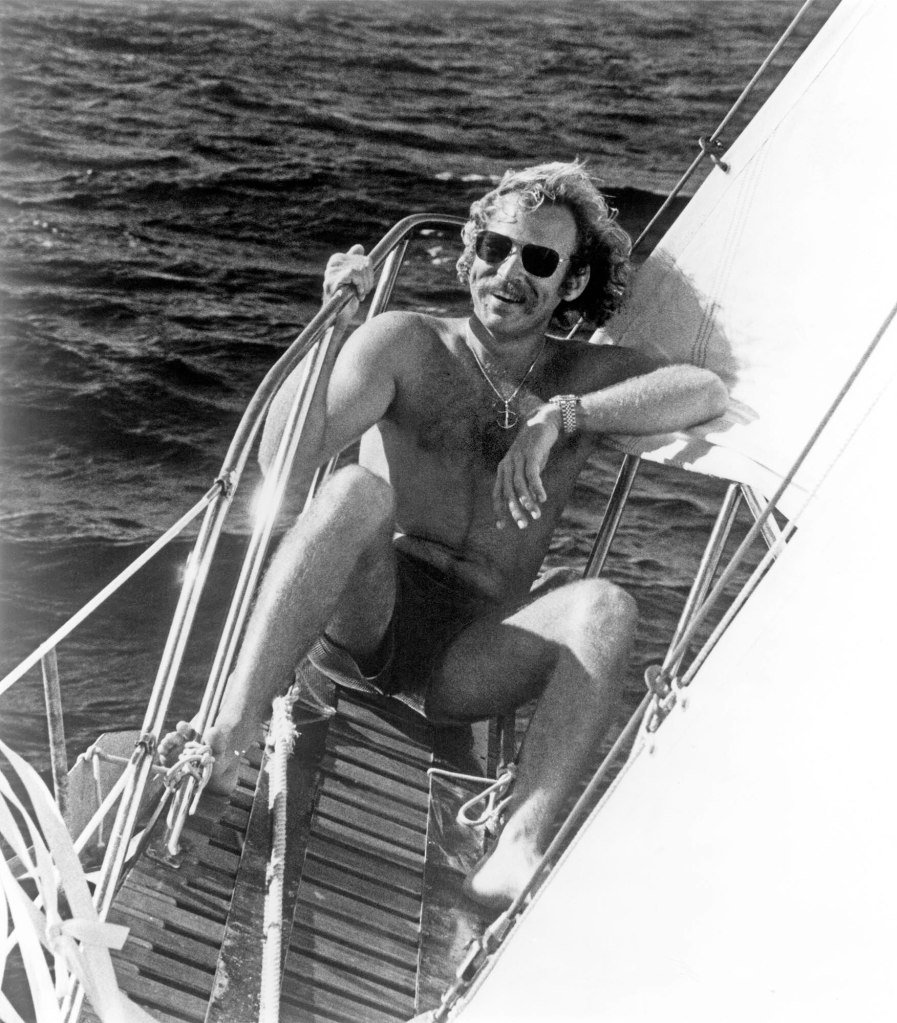
Prager and his crew hung out with Jimmy Buffett in Key West.
Michael Ochs Archives/Getty Images
In a few short years, Prager had carved out an expansive life as a Caribbean kingpin, transforming the ramshackle smuggling operation into a sophisticated, multicrew organization that moved tens of thousands of pounds of pot. They had only one strict rule: marijuana only. But as the Seventies gave way to the Eighties, reefer’s day in the sun was waning. Prager’s supplier, a “lovely” man he’d worked with since 1977, started asking him if he could run more lucrative cargo: cocaine. The pressure built slowly. The fertile marijuana fields in the mountains outside of Santa Marta were not an immediate priority for the new, organized cartels. But Barranquilla, across the bay, was, as Prager puts it, a “cartel town.” Eventually, the requests started to come. Economically, they made sense: Pot was bulky, heavy, and far less lucrative. Prager compares it to “smuggling elephants when you could be smuggling diamonds.” But he was resolute: Pot he believed in, cocaine he did not. The supplier didn’t understand it, but he respected it — for as long as he could. Eventually, in the early Eighties, it came to an ultimatum: Take the hard stuff with the pot, or take none of it at all. But in the summer of 1981, the cartels weren’t Prager’s biggest problem. For years, he’d lived a charmed life in the sun. Partied with rock stars, danced and sang, and racked up cash in offshore accounts. But as Prager laid low, the authorities closed in.
Down With the Ship
BY 1981, PRAGER’S OPERATION had ballooned into a loose network of half a dozen boats, a pirate fleet of vessels usually found floating around the Caribbean. They’d streamlined the process, as well: Rather than brave the brutal offshore winds in sailboats, the gang used a converted fishing trawler to plow through rough seas and load up massive shipments of tens of thousands of pounds of pot. The trawler mothership would then chug into a secluded port in the islands, where the sailboats would split the haul and start their journeys to the U.S. The smuggle that summer was a big one: three sailboats, loaded with weed, all on their way to the gang’s safe house on Little Deer Isle in Maine. Jim “Spock” Homan, another friend of Pace and Keenan’s from Georgia, had installed long-range radio systems on most of the boats, and from a dusty study in the Little Deer safe house, Prager was on the line constantly coordinating different aspects of the operation. The three boats were almost home, sailing the last few dozen miles before disappearing into Maine’s unchartable maze of inlets and bays. But then, from the safe house, the radio chirped. It was the captain of the first boat, reporting the worst news any of the smugglers had ever gotten on the water.
“We’re being boarded.”
A passing Coast Guard boat had noticed their boat was riding suspiciously low in the water — far too heavy for a pleasure trip. They decided to inspect, and just like that, the jig was up. The crew — which included Kaumu, the driver of the ill-fated Ryder truck all those years before — were taken into custody, and the operation started to unravel from there.
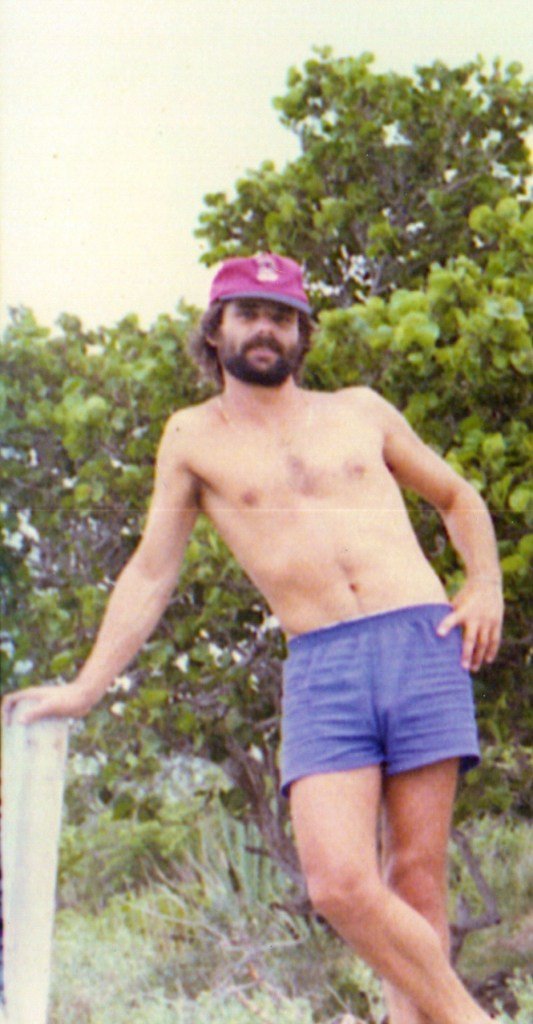
Prager’s operation eventually included half a dozen boats.
The authorities moved slowly, at first. The gang bailed out their crew, and it seemed like they could plead ignorance and get off easy. But in 1984, a raft of unsealed federal indictments made it clear the feds had gotten someone to talk. The group, scattered at this point across the Western Hemisphere, went further into the wind. Some, like Homan, procured “dead baby passports” — a real passport under the name of a child close to his age who had died in infancy without proper record keeping — and spent years wandering the world, trying to keep fractured family lives together back home. In 1985, Prager briefly went to Argentina, where he helped set up a hospice-care facility using some of his drug money. But he was determined to finish the house on St. Barts, and returned there in 1986 to finally do just that. On the islands, he used his original passport and name. By the end of 1986, the house — and Prager’s life on St. Barts — was done.
A Robbery in Knightsbridge
IN LATE JULY 1987, Prager and his girlfriend, Sandrine, came home to London after a three-week sojourn in Bali, Indonesia. The trip had been “magical,” Prager remembers, and the couple dropped their bags in Prager’s airy flat and wandered out into the city in a jet-lagged, love-drunk daze, in search of coffee. On the way to a cafe, they passed a newsstand, and Prager’s world dissolved in front of him again.
The front page of the tabloids that day was an explosive update on the Knightsbridge robbery, a wild bank heist that had taken the U.K. by storm while Prager and Sandrine were away in the far east. A gang of thieves had broken into the Knightsbridge security-deposit center in London, smashing into vaults and making off with close to $40 million pounds in cash and valuables. One of the safety deposit boxes they’d smashed belonged to Prager, but unfortunately for him, the thieves had left the contents alone. When Scotland Yard arrived to investigate, they found, among the detritus left behind, Prager’s original passport and a stack of financial records, correspondence, and documents that identified him as a man wanted by American authorities for dealing weed all over the Eastern Seaboard. That’s what Prager saw on his jet-lagged walk for coffee: a tabloid photo of the bank, covered in discarded papers and documents the thieves had left behind.
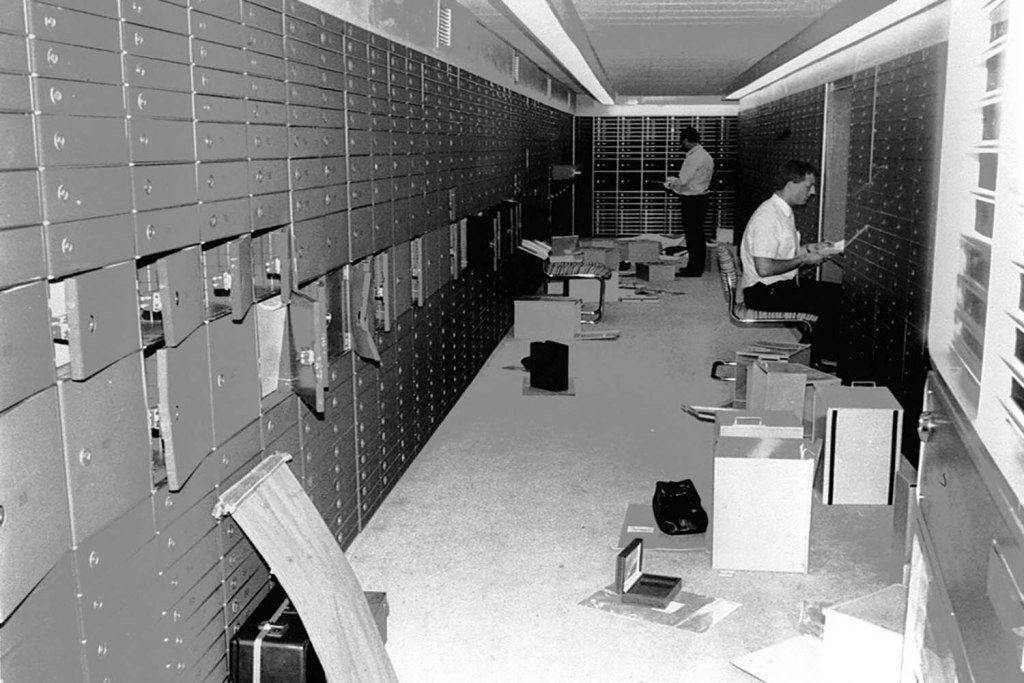
The Knightsbridge Safe Deposit Centre in London was broken into — but Prager’s belongings were left behind.
PA Wire/AP
Prager walked back to his flat in a panic. Sandrine, concerned, could only guess at what was wrong. She and Prager had been dating for just over a year, after meeting through a business associate of Prager’s as he set up a career as an art dealer in Europe. According to Prager, he had broadly told her he had “a problem,” but the conventions of French society meant she had never pried into why, exactly, he was loath to ever return to the U.S. Over the next three months, Prager thought long and hard about his future. In the London house, its walls covered with paintings Prager had bought in his new career as an art dealer, Prager listened over and over again to Jimmy Buffett’s “A Pirate Looks at Forty.” Almost four decades later, he still knows the lyrics by heart, words he repeats to me many times over our many hours of interviews in his basement study. “I’ve done a bit of smugglin’, and I’ve run my share of grass,” Prager hums slowly one afternoon. “I made enough money to buy Miami, but I pissed it away so fast. Never meant to last, never meant to last.”
Prager turned 40 in March that year. In October, he turned himself in to Scotland Yard.
The Last of the Amateurs
PRAGER WALKED INTO THE United States District Court of Maine on Sept. 29, 1988, with the rest of his life on the line. The District Court building is a gray stone structure that Prager had come to know well. For months, he’d been working with the authorities to voluntarily forfeit and drain his offshore accounts. He didn’t mind the work — it was the only thing that got him out of the excruciating holding pen in the Cumberland County Jail, where the lights were always on and the TV was always blaring. More importantly, forfeiting his assets was a key part of a wild, risky, and unprecedented plan Prager and his lawyers had cooked up to help him avoid a brutal Reagan-era drug sentence — up to 15 years behind bars.
Prager’s lawyers led him, clad in a suit, into the building’s main courtroom. Framed portraits of former judges stared down at him from the eaves, and behind a heavy wood podium, the Honorable Judge Gene Carter waited, looking down through square, rimless eyeglasses perched above a neatly trimmed mustache. Carter, at the time, was a stickler. He was prepared to bring the hammer down on Prager for his years of crime, and everyone in the room knew it. But somehow, over the preceding months, Prager had managed to get basically everyone else present at his sentencing hearing on his side, including the prosecutors responsible for putting him away.
The plan, as he’d laid it out, was both simple and wildly unprecedented. In lieu of prison time, Prager and his lawyer, a college friend named Jay Sweet, were offering the court a bizarre alternative sentence: Use the proceeds from his drug empire to establish and fund a groundbreaking hospice-care facility in Portland aimed solely at victims of a new disease, AIDS, that was tearing through the country. As penance, Prager would run the center, live on the premises and personally tend to patients for years, until the last one had died or his sentence was up. Prager’s idea wasn’t completely out of the blue. Before his time in Europe’s art world, Prager had moved to Argentina, where, he says, he used some of his drug proceeds to set up a hospice facility for AIDS patients with his cousin. Buenos Aires, at the time, was ravaged by the disease, and Prager says that project was one of the most meaningful of his life. He knew he could contribute to society by doing it in America, where, in the early Nineties, almost no one else was.
To make his case, Prager had brought witnesses: former college professors, friends, and, crucially, several local doctors on the front lines of the AIDS crisis. While out on bail, Prager earned a nursing credential and began shadowing some of these doctors on their rounds.
“When we speak of AIDS, we speak about an illness that people do not run towards,” Dr. Owen Pickus, the chief of Oncology and Hematology at the Osteopathic Hospital of Maine, said during his testimony during the sentencing hearing. “I don’t know Harvey Prager well enough to say to you that his greatest fear is dying or being infected with the AIDS virus. But I can say from my observation of the public, given the choice, I suspect, of spending six months in jail or six months involved in direct AIDS care, I would question how many people would choose the AIDS care.”
Pickus and several other witnesses made the core points of Prager’s argument: that he could be of far more service to society working in the hardest corners of a little-known epidemic than in a jail cell. But there was still the matter of his crimes: For almost a decade, Prager had participated in the organized smuggling of marijuana through several countries. He was a long-haired, wild-bearded hippie, pictured shirtless on the decks of sailboats, toting a long rifle the smugglers carried for fear of pirates in the early years at sea. But the case’s lead prosecutor, Joseph Groff, saw through that exterior. By this time, in the late Eighties, the new drug cartels led by infamous figures like Joaquín “El Chapo” Guzmán and Pablo Escobar were flooding the U.S. with a different crop from Colombia: cocaine. They used speedboats and machine guns, private planes and corrupt cops. They were a far cry from Prager’s gang of Ivy League rejects, and Groff knew it.
“Mr. Prager stopped these drug activities a long time ago … when the markets in Colombia between marijuana and cocaine started to become horizontally integrated. Mr. Prager and that group refused to become involved in the cocaine trade,” Groff said in his opening statement to Carter. “And I think that is pretty clear, that is about the time that this group, the last of the great amateurs, withdrew from this whole mess.”
The drug trade, Groff said over and over again, was a different world now. And Prager was not one of the monsters involved. Groff’s job was to prosecute Prager, but his testimony from the hearing reads more like a defense. After two and a half hours, Carter called Prager to the stand. His questions were extensive, but the most pertinent one was this: How could he be sure Prager would do what he promised. How could he take the word of a pirate?
“The answer, your Honor, is I need to follow through,” Prager said. “I need this more than anything in life. I desperately want to prove myself. I desperately want to pay my debt to society. I owe that debt. I desperately want to make a contribution.”
The last of the amateurs, as Prager tells me decades later, wanted to make the world a better place. They were searching for meaning and connection. Prager was influenced by the ideals of the Whole Earth Catalog, a foundational publication of the counterculture in the late 1960s. His mantra was a phrase first printed on the back cover of its 1974 edition: “Stay hungry, stay foolish.” It meant, he thought, to follow your passions and to take risks in getting there. When Italian thieves blew apart Knightsbridge, Prager could have fled. The money was there. He had friends in Mauritania, far from the arms of the state. But he wasn’t hungry for it.
“I realized I wasn’t being fulfilled living life as a fugitive,” Prager tells me. “There was just something awful about being somebody else than who you feel that you really are.”
Near the end of the proceedings, he told the court: “If I fail, if I err, even once, banish me. But let me create that hospice, let that hospice become my prison, and let me turn that prison into an oasis here in this community, an oasis where truly desperate people can come and find a place to die with some measure of dignity and peace, and comfort, and care and support.”
Behind the podium, something had changed. Over the past four years, Carter had handed down sentences as long as 10 years to more than 20 other members of Prager’s crew. Prager and Sweet knew their plea was a long shot — but they suspected their case had broken through.
“It was my conviction when I came on the bench this afternoon that there must be significant punishment in this case,” Carter said.
“I can’t help but conclude that the damage that that fact represents is probably even greater than the damage that is presented by the use of 22,000 pounds of marijuana,” Carter continued. “I never thought that I would be able to say there was anything much worse than that.”

Today, Prager is a lawyer at a firm focused on civil rights.
Sacha Lecca
In Prager’s case, Carter concluded, there was a unique opportunity to deliver a sentence unlike any other the court had ever passed down. Prager would set up the hospice. He would live in it and serve in it on probation for five years. His drug money would pay for it. And then he would be free.
A Pirate Looks at 80
PRAGER IS 78 YEARS OLD NOW — a pirate looking at 80. He still talks regularly to Keenan and Pace, who he still calls “Jake” and “Cochise.” Pace still refers to Keenan as “Pigpen,” and both of them call Prager “Jack,” funnily enough. They’re not quite sure why. Everyone got a nickname on the sea, and most of them stuck. They’ve all had full, vibrant lives, even after time in prison. Keenan lives near Pace’s son Simon, who he calls “Skokonut,” in Asheville, North Carolina. Pace lives on a sailboat called Sweetie Lee, anchored on the west coast of Florida. A few years back, Prager says, he, Keenan, Pace, and Prager’s daughter Charlotte sailed from the Yucatan to Florida together. The Escape has a new life, as well: It’s now a clean-energy freight vessel operated by a boutique shipping company that transports goods up and down the Hudson River.
Prager, meanwhile, has continued to stay hungry and foolish. In his final years at the hospice, he went to law school. He and Sandrine raised Charlotte at the facility. Prager clerked for a prestigious judge, and then, over the course of decades of argument, successfully petitioned both the Massachusetts and New York Bars to admit him. He now works for a firm that specializes in civil rights, including overturning wrongful convictions. He and Sandrine separated some years ago, but Charlotte and their other daughter, Capucine, live close by in Brooklyn. Prager now lives with Susie Bedsow Horgan, his high school sweetheart, who he reconnected with when she reached out to him to write a TV pilot about his life more than a decade ago. The pilot never panned out, but their high school romance did. They cook steaks that I can smell in the hallway and scream during Knicks games. When he tells his story, there’s a little smile that creeps up, particularly when he’s talking nonchalantly about fighting 20-foot surf on the outer rim of a hurricane or about the French models who used to vacation on St. Barts when he was king of the island.
It’s hard to think of Prager as a drug smuggler, all those years ago. I know him as my kindly, soft-spoken neighbor. For hours over the past year, we sat in his basement study sifting through stacks of papers he’d lay out on the spare bed, eating almonds and occasionally sipping red wine. As his life unfolded in those conversations, though, it became easier to see him as an idealist. It seems silly, in some ways, to describe smuggling pot as a revolutionary act, but that’s because our frame of reference for the international drug trade has changed drastically over the past five decades. Smugglers now aren’t questioning systems of power; they’re exploiting an economic system rewarding unrestrained greed and the willingness to kill.
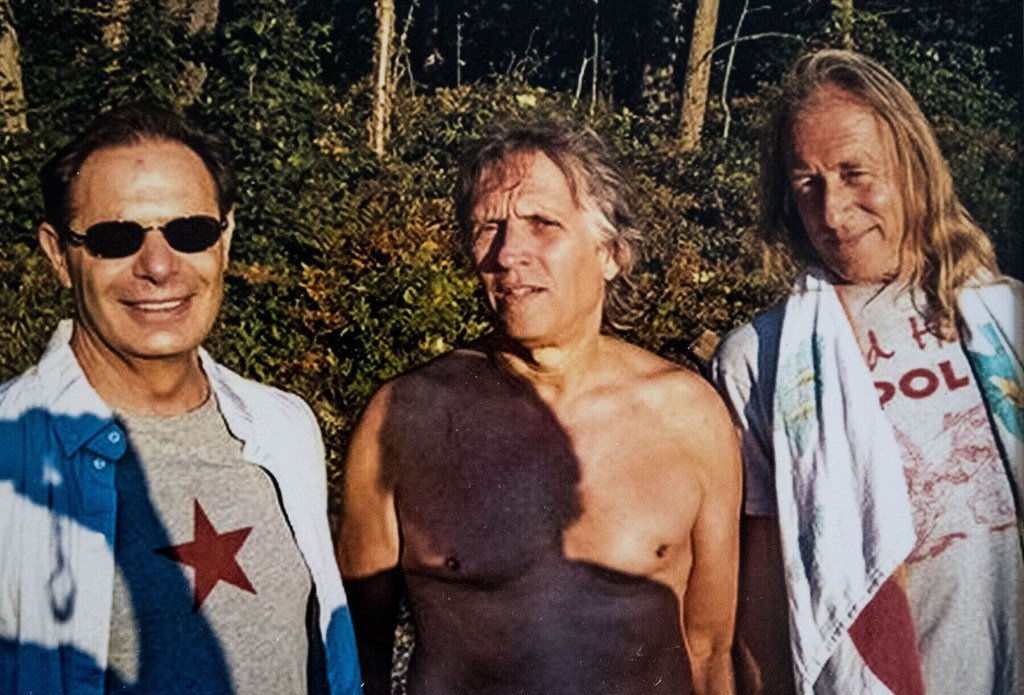
Prager, Jake “Pigpen” Keenan, and Mike “Cochise” Pace got together in 2009 for a reunion.
In 2009, much of the gang got together for a huge reunion. It was the 30-year anniversary of one of their biggest smuggles, a massive haul in 1979 that they celebrated by renting out a summer camp in Massachusetts and putting on their own private Woodstock. For the reunion, they rented out the same camp. Sure, there were fewer bands, but Keenan worked the phones for weeks tracking down as many of the sailors and smugglers from that era as possible. There were enough of them there for a full softball game: felons versus the non-indicted. The felons thought they had it in the bag, but the non-indicted ended up winning — they were the lucky ones, after all.