
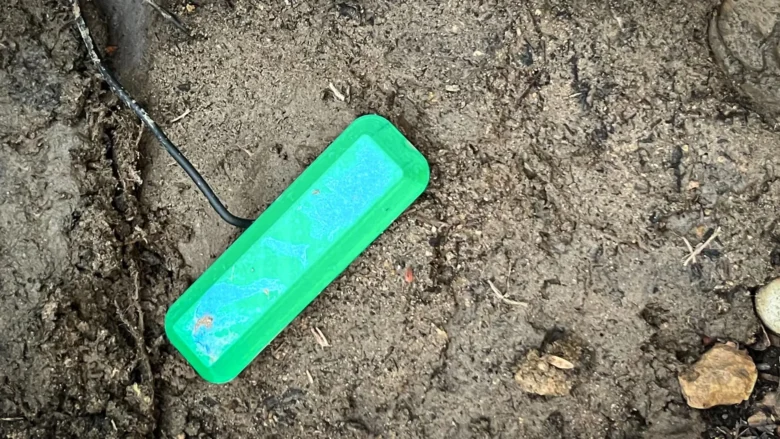
Researchers led by Northwestern University have developed a fuel cell that generates electricity using microbes naturally found in soil. The device, roughly the size of a paperback book, produces small amounts of power by capturing energy released as these microorganisms break down organic material in dirt.
This soil-powered system is designed to run underground sensors used in precision agriculture and environmental monitoring. It offers a potential alternative to traditional batteries, which contain toxic and flammable materials, rely on complex global supply chains, and contribute to growing electronic waste.
Powering Sensors Without Batteries
To demonstrate its capabilities, the team used the fuel cell to operate sensors that measure soil moisture and detect touch. This touch-sensing ability could help monitor wildlife movement, such as animals passing through a field. The system also includes a small antenna that sends data wirelessly by reflecting existing radio frequency signals, which keeps energy use extremely low.
The device proved reliable across a wide range of conditions. It functioned in both dry soil and flooded environments, and it produced more sustained power than similar systems, lasting about 120% longer.
The study was published in the Proceedings of the Association for Computing Machinery on Interactive, Mobile, Wearable and Ubiquitous Technologies. The researchers also released their designs, tutorials and simulation tools publicly so others can build on the work.
Why Soil Microbes Matter for the Internet of Things
“The number of devices in the Internet of Things (IoT) is constantly growing,” said Northwestern alumnus Bill Yen, who led the work. “If we imagine a future with trillions of these devices, we cannot build every one of them out of lithium, heavy metals and toxins that are dangerous to the environment. We need to find alternatives that can provide low amounts of energy to power a decentralized network of devices. In a search for solutions, we looked to soil microbial fuel cells, which use special microbes to break down soil and use that low amount of energy to power sensors. As long as there is organic carbon in the soil for the microbes to break down, the fuel cell can potentially last forever.”
Microbial fuel cells, often called MFCs, work somewhat like a battery. They include an anode, cathode and electrolyte, but instead of chemical reactions, they rely on bacteria that naturally release electrons. When these electrons move through the system, they create an electric current.
“These microbes are ubiquitous; they already live in soil everywhere,” said Northwestern’s George Wells, a senior author on the study. “We can use very simple engineered systems to capture their electricity. We’re not going to power entire cities with this energy. But we can capture minute amounts of energy to fuel practical, low-power applications.”
Challenges With Solar and Battery-Powered Sensors
Precision agriculture depends on large networks of sensors that continuously track soil conditions such as moisture, nutrients and contaminants. These data help farmers make more informed decisions and improve crop yields.
But powering those sensors is a major challenge. Batteries eventually run out and must be replaced, which is impractical across large farms. Solar panels can also be unreliable because they become dirty, require sunlight and take up space.
“If you want to put a sensor out in the wild, in a farm or in a wetland, you are constrained to putting a battery in it or harvesting solar energy,” Yen said. “Solar panels don’t work well in dirty environments because they get covered with dirt, do not work when the sun isn’t out and take up a lot of space. Batteries also are challenging because they run out of power. Farmers are not going to go around a 100-acre farm to regularly swap out batteries or dust off solar panels.”
The researchers instead focused on harvesting energy directly from the soil itself, turning the environment into the power source.
Why Earlier Microbial Fuel Cells Fell Short
Soil-based microbial fuel cells have existed since 1911, but they have struggled to deliver consistent performance. These systems need both moisture and oxygen to function properly, which can be difficult to maintain underground, especially in dry conditions.
“Although MFCs have existed as a concept for more than a century, their unreliable performance and low output power have stymied efforts to make practical use of them, especially in low-moisture conditions,” Yen said.
A New Design Improves Performance
To address these issues, the team spent two years developing and testing different designs. They compared four versions and collected nine months of performance data before selecting a final prototype, which they tested outdoors.
The breakthrough came from a change in geometry. Instead of placing the anode and cathode parallel to each other, the new design positions them perpendicular.
The anode, made of carbon felt (an inexpensive, abundant conductor to capture the microbes’ electrons), lies horizontally beneath the soil. The cathode, made of a conductive metal, extends vertically to the surface.
This structure helps solve several problems at once. The top of the device remains exposed to air, ensuring a steady oxygen supply. At the same time, the lower portion stays buried in moist soil, maintaining hydration even during dry conditions. A protective cap prevents debris from entering, while a small air chamber allows airflow.
The design also improves resilience during flooding. A waterproof coating allows the cathode to keep functioning, and the vertical layout helps it dry gradually after water recedes.
Strong Results in Real-World Conditions
The final prototype performed well across a wide range of soil conditions, from moderately dry soil (41% water by volume) to fully submerged environments. On average, it generated 68 times more power than required to run its sensors.
These results suggest the system is robust enough for real-world deployment in agricultural fields or natural environments.
Ongoing Research and Future Potential
Since the study was first published, interest in microbial fuel cells has continued to grow. Researchers are working to improve efficiency, stability and materials, including exploring biodegradable designs that could further reduce environmental impact.
The Northwestern team notes that all parts of their system can be sourced from common hardware materials. They are now aiming to create fully biodegradable versions that avoid complex supply chains and conflict minerals.
“With the COVID-19 pandemic, we all became familiar with how a crisis can disrupt the global supply chain for electronics,” said study co-author Josiah Hester, a former Northwestern faculty member who is now at the Georgia Institute of Technology. “We want to build devices that use local supply chains and low-cost materials so that computing is accessible for all communities.”
While the technology is not intended to power large systems, it could play an important role in supporting low-energy devices across agriculture, environmental monitoring and the expanding Internet of Things.
Key Points
- Scientists have created a new fuel cell that uses naturally occurring soil microbes to generate electricity
- The system can power underground sensors that track soil moisture and even detect movement or touch
- It continues working in a wide range of conditions, from dry soil to fully flooded environments
- This technology could offer a cleaner alternative to batteries for sensors used in precision agriculture
The study, “Soil-powered computing: The engineer’s guide to practical soil microbial fuel cell design,” was supported by the National Science Foundation (award number CNS-2038853), the Agricultural and Food Research Initiative (award number 2023-67021-40628) from the USDA National Institute of Food and Agriculture, the Alfred P. Sloan Foundation, VMware Research and 3M.