

Topline
Northern lights observers in 24 states have a shot at seeing the natural phenomenon Monday night, according to the National Oceanic and Atmospheric Administration, which provided a favorable aurora forecast for states closest to the northern U.S. border.
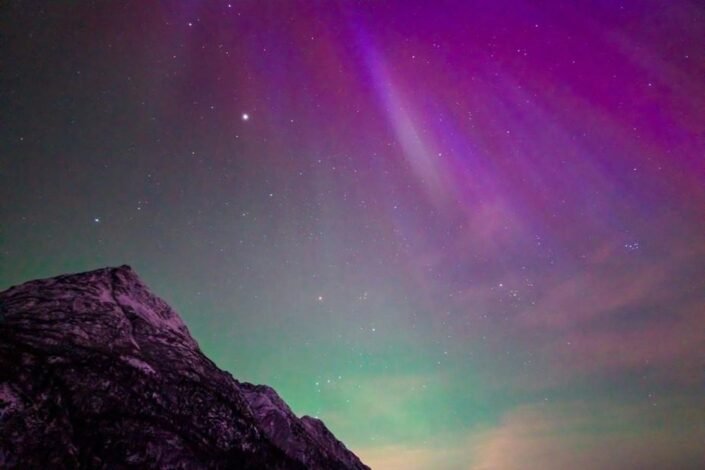
Northern lights in Alaska.
Photo by Hasan Akbas/Anadolu via Getty Images
Key Facts
A Kp index of four was issued for Monday night, meaning NOAA is expecting auroral activity that can be “quite pleasing to look at” for viewers in the right regions.
The curved viewing line for Wednesday stretches as far south as southern Iowa, with chances of seeing the aurora borealis increasing the farther north observers are of the line.
Tuesday’s viewing line remains the same, though the likelihood of aurora is forecast to dramatically decrease.
Where Will The Northern Lights Be Visible?
States within Monday’s viewing line include Alaska, northern Washington, northern Idaho, the majority of Montana, northeastern Wyoming, North Dakota, northern South Dakota, northeast Nebraska, Minnesota, most of Iowa, Wisconsin, northern Illinois, northern Indiana, the Michigan Upper Peninsula, the Michigan Lower Peninsula, northern Ohio, most of Pennsylvania, northern New Jersey, New York, Connecticut, Rhode Island, Massachusetts, Vermont, New Hampshire and Maine. Alaska, northern Montana, northern North Dakota and northern Minnesota have the highest likelihood of aurora among the states listed.
What’s The Best Way To See The Northern Lights?
With little to no moonlight or light pollution between the hours of 10 p.m. and 2 a.m., which is when the northern lights are typically most active. High vantage points can also help with visibility.
What’s The Best Way To Photograph The Northern Lights?
Shooting photos with tripods and night mode can help with getting shots of the Northern Lights. Avoid using flash and shoot photos in low apertures.
Key Background
The northern lights had a similarly active weekend, with NOAA forecasting a viewing line that incorporated 20 states and predicting a minor geomagnetic storm, which contribute to strong aurora showings. The sun’s 11-year solar cycle was reached in October 2024 but is expected to continue through this year, potentially increasing the chances of Northern Lights showings.
Further Reading
Aurora Dashboard (NOAA)